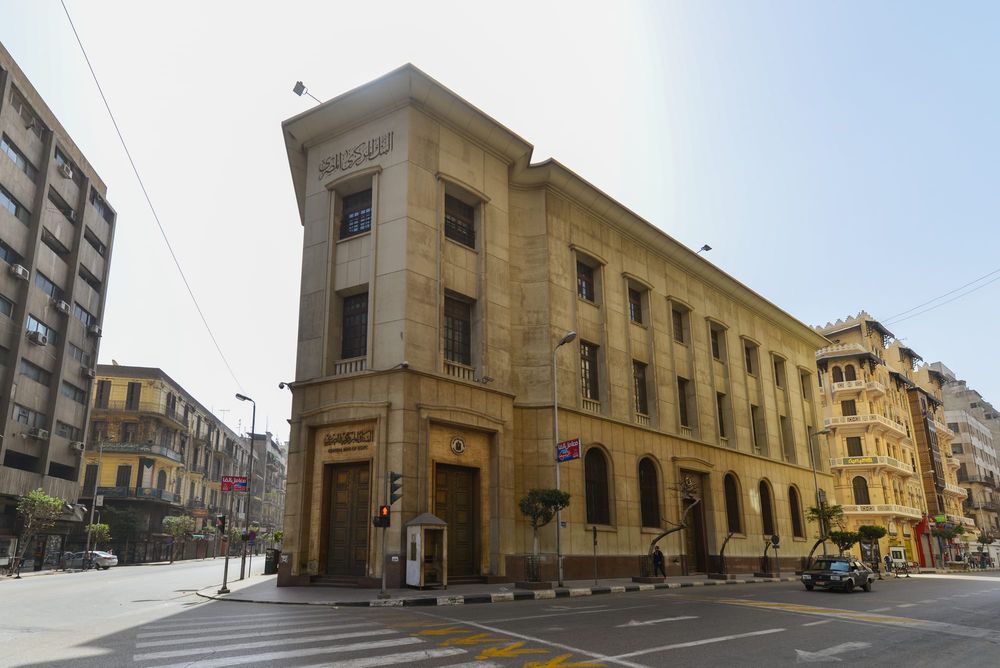
The Central Bank of Egypt held its overnight deposit rate at 22% and its overnight lending rate at 23% at the October 2025 meeting of its Monetary Policy Committee. The decision to maintain rates at current levels reflects the CBE's assessment that, while the disinflation trend is genuine and meaningful, the committee is not yet satisfied that conditions are sufficiently stable to justify a loosening of monetary policy. Balancing the imperative of returning inflation to target against the need to support economic activity, the committee opted to remain on hold at one of the highest nominal rate levels in the country's recent monetary history.
Egypt's inflation trajectory has been a defining feature of the country's economic debate over the past two years, following the sharp price pressures that accompanied a succession of pound devaluations and the removal of fuel and other subsidies as part of a broader fiscal reform programme. Annual headline inflation stood at approximately 14.9% in June, a marked improvement from the significantly higher levels recorded through much of 2024, but still above a range the CBE would consider consistent with price stability over the medium term. The pace of disinflation has provided the committee with room for discussion about the path of rates, but the October decision reflects a preference for caution.
DISINFLATION PATH JUSTIFIES PATIENCE
At 22%/23%, the CBE's overnight corridor maintains a strongly positive real interest rate relative to recent inflation readings, sustaining a restrictive monetary stance that continues to exert downward pressure on underlying price pressures. The committee's stated framing — balancing ongoing disinflation against growth support — acknowledges the real economy costs of maintaining elevated rates while also signalling that those costs are viewed as acceptable given the inflation starting point. For household borrowers, the current rate environment means expensive consumer and mortgage credit; for corporate borrowers, working capital and investment finance remain costly.
Egypt has been operating under an International Monetary Fund-supported reform programme that encompasses fiscal consolidation, subsidy rationalisation, and exchange rate flexibility. The structural adjustments embedded in that programme have contributed to the disinflation trend but have also generated significant adjustment costs across the economy. The CBE's monetary policy operates in close coordination with that macroeconomic stabilisation framework, and the October hold reflects a judgement that the reform programme and monetary policy together are producing the intended disinflationary effect, which should be allowed to run before the committee contemplates easing.
OUTLOOK FOR THE PATH OF RATES
The October decision leaves the CBE holding substantial room to ease policy if and when the committee judges that inflation has fallen far enough and sustainably enough to permit a reduction in the overnight rates. With headline inflation at approximately 14.9% in June and the overnight corridor at 22%/23%, even a sequence of rate cuts would leave monetary policy meaningfully restrictive in real terms. The question for market participants and analysts is how quickly the pace of disinflation continues through the third and fourth quarters of 2025 and whether the data trajectory is sufficiently convincing to bring the prospect of an initial cut onto the agenda at a future meeting.
The MPC's next scheduled meeting will be watched for any shift in language around the balance of risks or the weight the committee assigns to growth considerations relative to inflation. Any signal that the committee is more attentive to growth risks or that inflation is declining faster than projected would be interpreted as a precursor to future easing. For now, the CBE's hold at 22%/23% communicates a steady hand and a preference for certainty over the disinflation path before committing to a change in the rate setting.