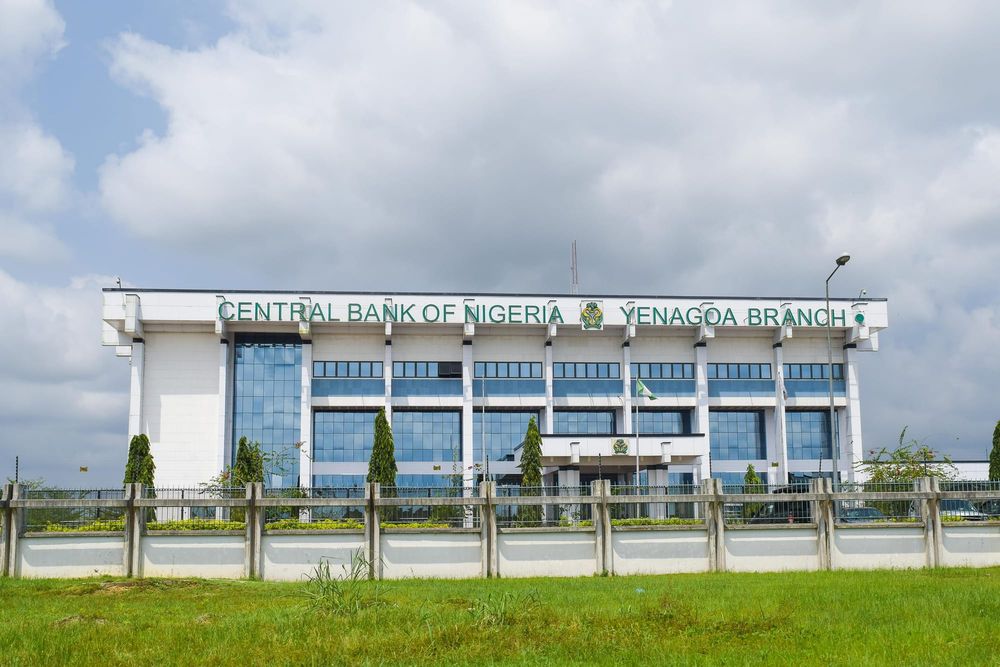
Nigeria's Central Bank has imposed separate fines of ₦1 billion on each of Moniepoint and OPay, two of the country's best-known fintech unicorns, following regulatory inspections that identified infractions including failures in anti-money laundering and counter-terrorism financing compliance. The penalties, levied in the second quarter of 2024, signal a markedly more assertive posture by the Central Bank of Nigeria towards digital financial service providers that have rapidly expanded their customer bases across the country in recent years. Both firms had grown to serve tens of millions of Nigerians, and their scale appears to have brought them squarely within the scope of the regulator's heightened scrutiny.
The sanctions against the two fintechs form part of a broader enforcement campaign that has simultaneously drawn in long-established commercial banks. Also in the first half of 2024, the CBN and the Securities and Exchange Commission together imposed a combined ₦15 billion in penalties on ten commercial banks, including Zenith Bank and Guaranty Trust Bank, for a range of violations. The breadth of the enforcement sweep underlines that the regulator's concerns about compliance gaps extend across the Nigerian financial system and are not confined to newer market entrants.
SCALE OF FINES REACHES RECORD LEVELS
The aggregate scale of CBN sanctions disclosed by major Nigerian lenders in 2024 has reached striking proportions. Total fines reported by seven major banks rose by more than 6,000 per cent year-on-year, reaching the equivalent of approximately $10.7 million. That figure reflects a concentrated enforcement effort across multiple institutions rather than a single outlying case. Zenith Bank alone accounted for the majority of the aggregate sum, paying approximately $9.6 million, of which a $9 million penalty related to violations of foreign exchange market practices. Access Bank disclosed fines of approximately $750,000 in the same period.
The disparity between the fines levied on fintechs and those borne by the largest commercial banks reflects differing exposure to foreign exchange operations, an area in which the CBN has been particularly vigilant following the naira's substantial depreciation over the preceding period. For Moniepoint and OPay, the ₦1 billion penalties represent a significant compliance cost, though both institutions have continued to operate and expand their services throughout 2024. The regulator's decision to impose uniform fines on the two fintechs rather than graduated penalties based on the severity of individual infractions suggests a clear signal was intended.
PRESSURE ON FINTECHS TO STRENGTHEN COMPLIANCE
The CBN's enforcement actions against Moniepoint and OPay underscore the heightened scrutiny that regulators are applying to payment service providers whose transaction volumes have grown to rival those of mid-tier commercial banks. As mobile money adoption accelerates across Nigeria, the regulator has made clear that anti-money laundering and counter-terrorism financing frameworks must keep pace with business growth, and that the fintech sector will not receive preferential treatment relative to licensed deposit-taking institutions when compliance failures are identified.
Both Moniepoint and OPay have built extensive agent networks that serve millions of Nigerians who lack access to traditional banking infrastructure, particularly in rural and peri-urban communities where brick-and-mortar branches are scarce. The CBN's decision to enforce its rules firmly across this segment suggests the regulator views robust compliance as a precondition for the continued expansion of digital financial inclusion in Africa's largest economy, rather than an obstacle to it. Firms that wish to grow within Nigeria's regulatory framework will need to invest commensurately in the systems and human capital required to meet the CBN's expectations.