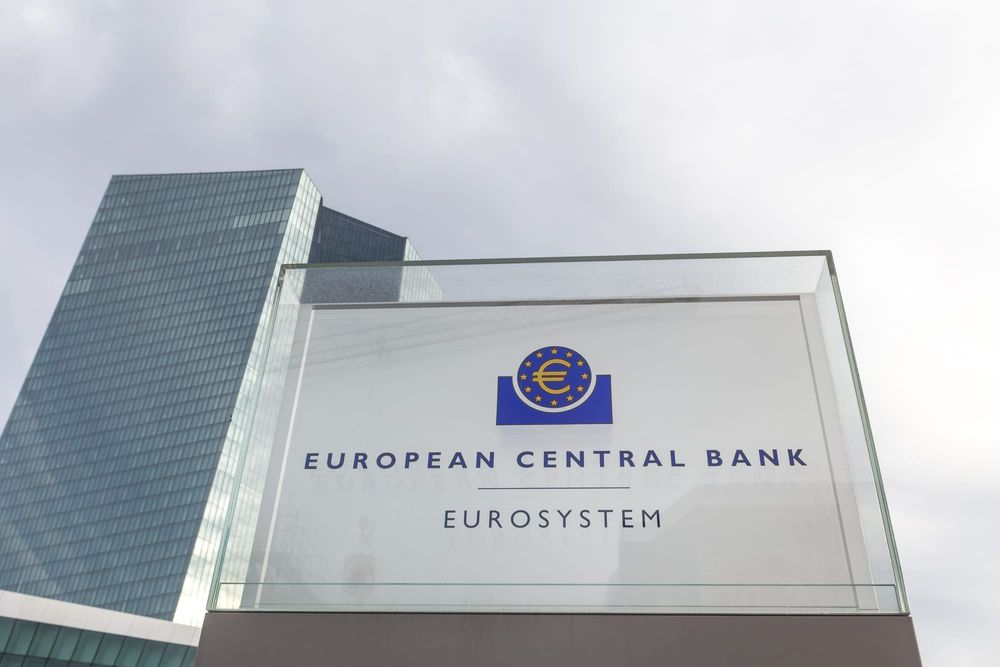
The European Central Bank left its deposit facility rate unchanged at 2.00% on 18 December 2025, marking the fourth consecutive meeting at which the Governing Council has opted to hold rather than adjust borrowing costs. The decision, announced at the ECB's final scheduled meeting of the year, drew attention not only for the rate outcome but for an upward revision to the bank's inflation projections that reinforced expectations of a protracted pause in the easing cycle.
Staff economists updated their forecasts ahead of the meeting, lifting the estimate for headline inflation in the euro area in 2026 to 1.9%, up from the 1.7% projected previously. The revision, modest in absolute terms, carries significance because it pushes the outlook closer to the ECB's 2% target and removes much of the urgency that had, earlier in 2025, driven successive rate reductions from higher levels.
INFLATION REVISION COMPLICATES EASING PATH
The upward move in staff projections reflects a combination of factors that have kept underlying price pressures stickier than anticipated, including resilient services inflation across major euro area economies and the lagged effect of energy-price base effects working their way through the index. With the 2026 forecast now sitting just a fraction below the target, policymakers have less room to argue that further accommodation is warranted in the near term.
The ECB has been among the more active major central banks in cutting rates during 2025, having moved steadily from the peak deposit rate of 4.00% reached in late 2023. The decision to hold at 2.00% reflects a judgement that the bulk of the normalisation work has been completed and that the current rate is broadly consistent with returning inflation sustainably to target without unduly restricting economic activity across the bloc.
Markets had largely priced in the hold ahead of the meeting, with the focus shifting to language around the outlook for 2026. The revised forecast adds weight to the view that the Governing Council intends to keep policy steady through much of next year, monitoring incoming data before committing to any further adjustment in either direction.
EXPECTATIONS SETTLE ON A PROLONGED HOLD
Analysts tracking the ECB's communications noted that the combination of a fourth consecutive hold and a higher inflation projection was consistent with a central bank that considers its current stance appropriate rather than restrictive. The bank is widely expected to remain on hold through 2026, barring a material deterioration in the growth outlook or an unexpected sharp decline in inflation below the target.
The December meeting closed out a year in which the ECB navigated considerable uncertainty about the pace of disinflation, fiscal pressures in several member states, and divergent growth trajectories across the euro area. Heading into 2026, the Governing Council faces the task of calibrating policy in an environment where price stability appears within reach but has not yet been definitively secured, and where the risk of easing prematurely remains a concern for those members wary of entrenching above-target inflation.
The next scheduled monetary policy decision is due in early 2026, at which point updated economic projections will again be available to inform the Council's deliberations.