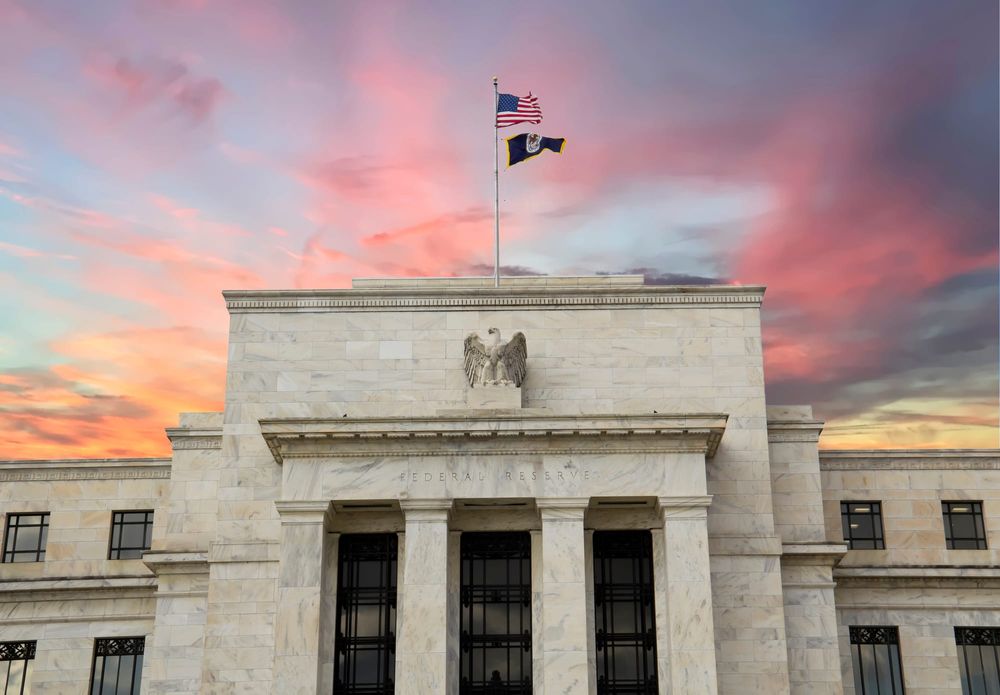
The Federal Open Market Committee voted on 29 October 2025 to reduce the federal funds target rate by 25 basis points to a range of 3.75% to 4.00%, the latest step in an easing cycle that the Federal Reserve began in September 2024. The decision was reached on a 10-2 vote, with the two dissenting members pulling in opposite directions: one preferred a larger 50 basis point reduction, whilst another voted to hold rates steady. The divergence illustrated the range of assessments within the Committee about how quickly policy should be normalised given the current state of the economy.
The cut brings the cumulative easing delivered since the start of the cycle to 150 basis points. The Federal Reserve stated that the United States economy was continuing to grow at a moderate pace—a characterisation that suggested neither the urgency of recession nor sufficient overheating to warrant a pause in the easing process. The Committee's statement reiterated its data-dependent approach, indicating that the future pace of rate adjustments would be guided by incoming information on inflation, employment, and broader economic activity.
SPLIT VOTE REFLECTS DIVERGENT RISK ASSESSMENTS
The 10-2 vote was among the most divided FOMC decisions since the current easing cycle began. Governor Miran, who preferred a 50 basis point cut, held the view that policy remains meaningfully restrictive and that the neutral rate could be reached more efficiently with a bolder move. Governor Schmid, who voted to hold, argued that the Committee should await additional evidence before cutting further, particularly given ongoing uncertainty about the durability of the retreat in inflation from its cycle highs.
Such dissent is not unusual for an institution that brings together twelve voting members with varied economic priors and regional perspectives. The fact that the two dissenting votes were cast in opposite directions—one for more easing and one for none—reflects how closely balanced the risks are perceived to be at this stage of the cycle. Markets have grown accustomed to split votes during this policy transition, and the October decision was unlikely to materially unsettle rate expectations.
The Committee's post-meeting statement contained no explicit forward guidance on the trajectory of future adjustments, reinforcing the meeting-by-meeting approach that Chair Jerome Powell has emphasised throughout the cycle. This approach gives the Fed flexibility to respond to shifting data without being locked into a predetermined path.
GROWTH MODERATE AS EASING CYCLE MATURES
The Federal Reserve's description of the economy as growing at a moderate pace reinforced the prevailing view that the United States has avoided a hard landing despite the most aggressive tightening campaign in decades. Labour market conditions remained broadly resilient, and policymakers noted that progress continued on returning inflation to the 2% objective, though they stopped short of declaring that goal achieved.
With the federal funds rate now at 3.75–4.00% and 150 basis points of easing delivered across successive meetings, debate was shifting toward the question of where the terminal rate in this cycle would ultimately settle. The Fed gave no explicit signal on that question, and investors and economists were left to interpret the statement and any subsequent public remarks from FOMC members to calibrate their expectations for the December and subsequent meetings.