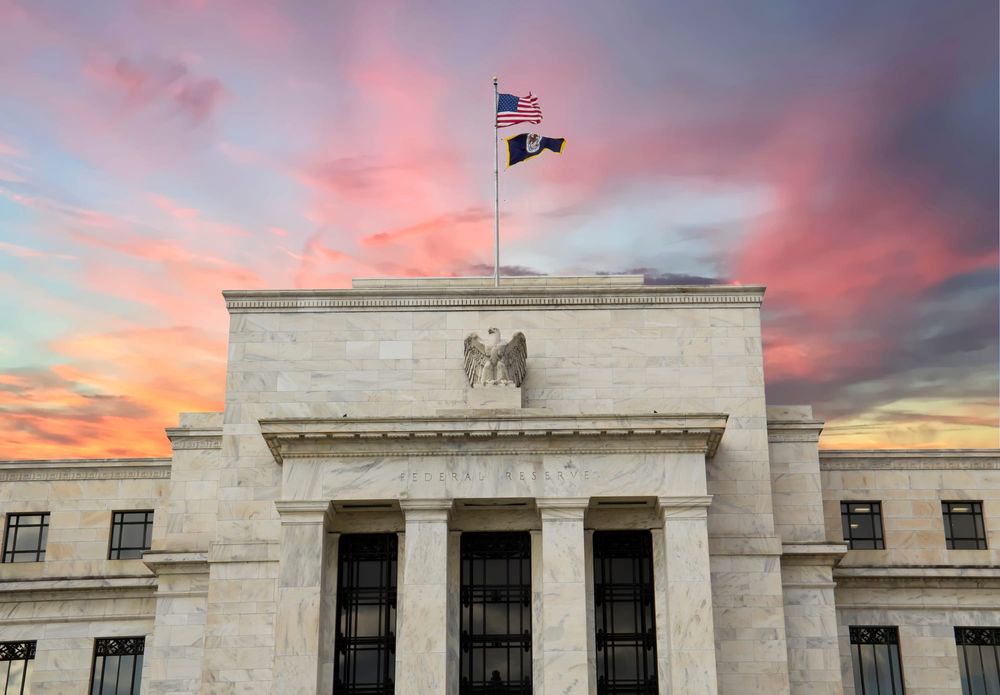
The Federal Reserve and the Federal Deposit Insurance Corporation jointly released on 5 August 2025 the public sections of resolution plans submitted by eight large financial institutions. The plans, widely known as living wills, are required under Title I of the Dodd-Frank Wall Street Reform and Consumer Protection Act and are intended to demonstrate that systemically important banks can be wound down in an orderly manner in the event of material financial distress or failure, without requiring a government rescue or causing destabilising disruption to the broader financial system. The publication makes available to market participants a summary account of each institution's resolution strategy and the key assumptions that underpin it.
The documents released publicly represent the non-confidential portions of what are typically much more detailed plans submitted in their entirety to the regulators. The confidential sections contain operationally sensitive information — including counterparty details, intraday liquidity mechanics, and specifics of service continuity arrangements — that is withheld from public disclosure. The public sections nonetheless provide a meaningful window into how each institution has structured its preferred resolution approach and the degree to which its strategy has evolved since the previous filing cycle.
THE DODD-FRANK TITLE I FRAMEWORK
Title I of Dodd-Frank established the resolution planning requirement as a central pillar of the regulatory architecture constructed in the years following the 2008 financial crisis. The framework was designed to address one of the most consequential lessons of that period: that the absence of credible wind-down plans for large, complex financial firms forced authorities into improvised responses that included extraordinary government support for failing institutions, socialising losses that the framework was supposed to prevent from falling on public balance sheets.
Under the Dodd-Frank regime, the Federal Reserve and the FDIC jointly assess each submitted plan for credibility and feasibility, and may identify deficiencies that the institution must remedy in subsequent submissions. Institutions found to have materially deficient plans face the prospect of additional regulatory requirements — including enhanced capital and liquidity buffers, restrictions on certain business activities, or in the most serious cases divestiture of business lines that impede resolvability. The joint review process reflects the shared authority of the two agencies: the Federal Reserve oversees bank holding companies, while the FDIC holds the statutory resolution authority for large bank failures.
SIGNIFICANCE OF THE EIGHT-BANK DISCLOSURE
The eight institutions covered by the August 2025 release are among the largest and most systemically interconnected financial firms operating in the United States. Their resolution plans are submitted on a cycle determined by the regulators, with submission timing reflecting the size and complexity of each institution and the extent of material changes in its business or risk profile since the previous filing. The public sections allow analysts, counterparties, and academic researchers to track the evolution of each bank's resolution architecture over successive filing cycles.
The Federal Reserve and the FDIC did not indicate in the August 2025 release whether any of the eight plans had been identified as having material shortcomings, a determination that follows a detailed internal review process separate from the public disclosure. Financial institutions, their creditors, and counterparties will study the published documents to assess each bank's legal entity rationalisation, its plans for maintaining critical operations through a stress scenario, and the extent to which its preferred resolution strategy relies on a single point of entry approach rather than a multiple-entity resolution structure. These architectural choices have meaningful implications for how losses would be distributed and how operations would be preserved in a real resolution event.