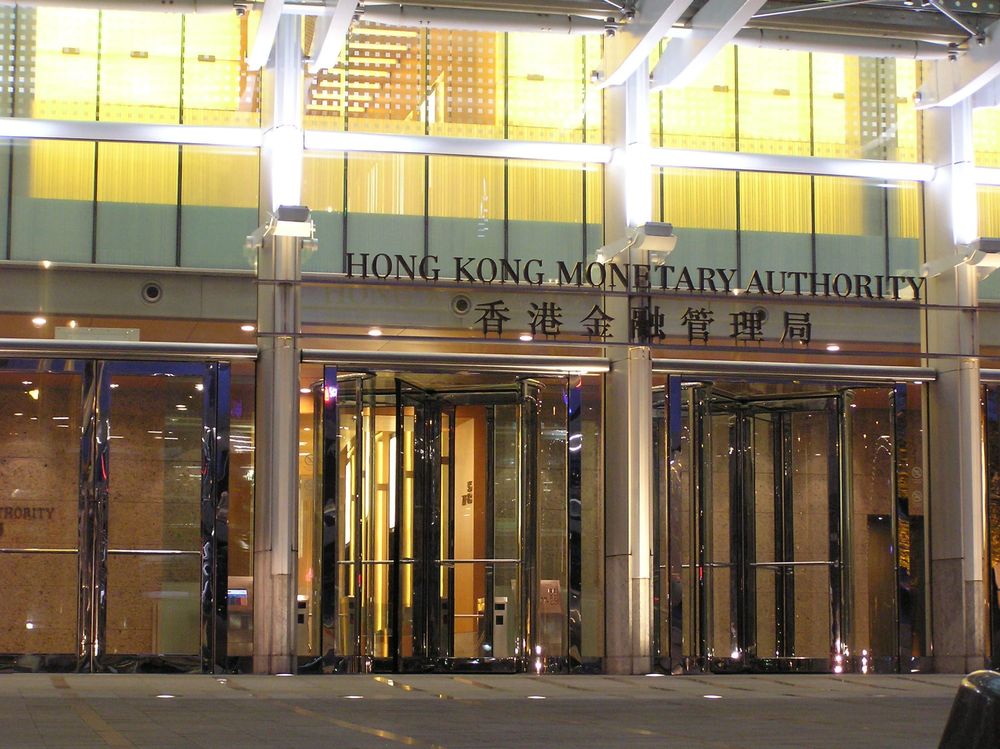
The Hong Kong Monetary Authority kept its base rate at 4.00% on 29 January 2026, moving in lockstep with the United States Federal Reserve, which held its target range at 3.50% to 3.75% at its January policy meeting. The HKMA's decision was automatic rather than discretionary, reflecting the structural requirement of Hong Kong's linked exchange rate system to track the Federal Reserve's rate settings in order to maintain the Hong Kong dollar's peg to the US dollar.
Under the linked exchange rate system, which has been in operation since 1983, the HKMA manages the Hong Kong dollar within a narrow band against the US dollar and aligns its base rate with the Fed's policy rate. This arrangement means that local borrowing costs, including mortgage rates and corporate lending rates, are effectively set in Washington rather than Hong Kong, giving the city's monetary conditions a distinctive character that differs fundamentally from the discretionary rate-setting conducted by most central banks around the world.
THE MECHANICS OF THE LINKED EXCHANGE RATE
The base rate maintained by the HKMA serves as the reference point for the discount window through which licensed banks can access overnight liquidity. When the Federal Reserve adjusts its federal funds rate, the HKMA moves its base rate correspondingly to preserve the interest rate differential that underpins the peg mechanism. A sustained divergence between Hong Kong and US interest rates would generate capital flows that could pressure the exchange rate outside its permitted band, which is why the HKMA's mandate requires it to follow the Fed's lead with consistency.
The Fed's January 2026 decision to hold its target range at 3.50% to 3.75% comes after a period of rate reductions from the peak levels reached during the 2022–2023 inflation cycle. The pause in cuts reflects the Fed's assessment that it can afford to evaluate incoming economic data before making further adjustments. For Hong Kong, the practical effect is that the base rate remains at 4.00% — unchanged from the prior setting — and the transmission of US monetary policy into local credit conditions continues through the normal channels of the banking system.
IMPLICATIONS FOR HONG KONG'S BANKING SECTOR
A base rate of 4.00% keeps funding costs for Hong Kong banks at an elevated level relative to the near-zero environment that prevailed for much of the decade before 2022. While higher rates have supported net interest margins for the city's lenders, they have also weighed on the residential property market and on the debt-servicing capacity of leveraged borrowers, dynamics that the HKMA and Hong Kong's banking supervisors continue to monitor closely alongside broader financial stability indicators.
For mortgage holders and corporate borrowers, the January hold means that loan repayment costs remain at current levels for the time being, with any relief dependent on the Fed's future rate decisions. Market participants are watching the Fed's forward guidance closely for signals about the pace and magnitude of any further easing, as these will determine when and by how much the HKMA's base rate might be adjusted downward in subsequent months.
The HKMA has noted that Hong Kong's financial system remains resilient and that the banking sector holds comfortable capital and liquidity buffers. The January rate hold does not alter the structural integrity of the linked exchange rate system, which continues to function as intended, providing the currency certainty that underpins Hong Kong's role as an international financial centre and its attractiveness to global banks and corporations with regional treasury operations based in the city.