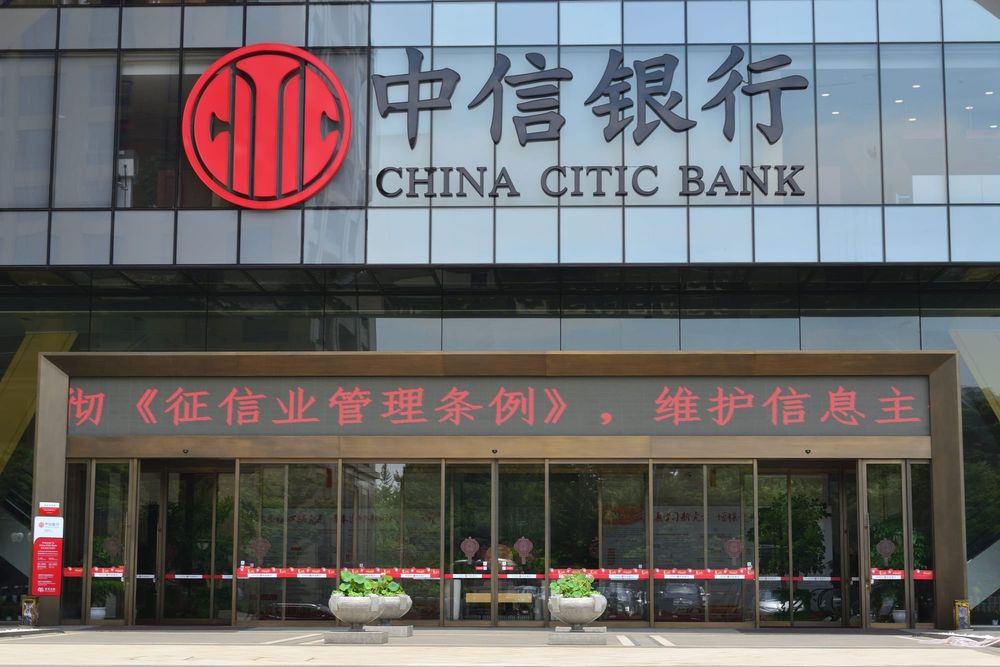
The Hong Kong Monetary Authority has imposed a pecuniary penalty of HK$4,000,000 on China CITIC Bank International Limited, citing material deficiencies in the bank's transaction monitoring systems and controls under the Anti-Money Laundering and Counter-Terrorist Financing Ordinance. The enforcement action, announced on 6 December 2024, was taken under Section 21(2)(c) of the Ordinance following a regulatory investigation into the bank's AML compliance programme.
China CITIC Bank International is the Hong Kong subsidiary of CITIC Group, one of mainland China's largest state-owned conglomerates. As an authorised institution in one of Asia's most internationally connected financial centres, the bank is subject to the full scope of the HKMA's AML and counter-terrorist financing requirements, which are aligned with international standards set by the Financial Action Task Force. The HKMA made its determination public on its official website, as is standard practice for pecuniary penalties of this nature.
TRANSACTION MONITORING GAPS AT THE HEART OF FINDINGS
The HKMA's investigation identified two central shortcomings in China CITIC Bank International's compliance framework. The first concerned the adequacy of the bank's transaction monitoring procedures themselves — specifically, whether those procedures were configured and maintained in a manner capable of reliably detecting the patterns of activity associated with money laundering and the financing of terrorism. Regulators found that they were not, constituting a gap at the foundation of the bank's AML programme.
The second failing was the bank's inability to properly investigate high-risk transactions flagged by its systems. Under Hong Kong's AML framework, institutions are expected not merely to screen transactions but to conduct genuine follow-up enquiry when alerts are generated. The failure to do so defeats the purpose of automated monitoring and significantly increases the risk that suspicious activity passes through without appropriate scrutiny or reporting to the relevant authorities.
The HKMA did not allege that any specific illicit transactions were successfully processed as a result of these deficiencies. However, the regulator consistently treats procedural inadequacy as a standalone breach of the Ordinance, regardless of whether harm is demonstrated. The existence of a gap in a required control is itself the contravention, and the penalty reflects the authority's view that the deficiencies were sufficiently serious to warrant formal sanction under the statutory enforcement framework.
CORRESPONDENT AND CORPORATE BANKING AML CONTROLS IN FOCUS
The action reinforces the HKMA's sustained focus on AML controls in correspondent banking and corporate banking channels, both of which carry elevated money laundering risk because of the cross-border nature and complexity of the transactions involved. These segments require particularly robust monitoring because individual transactions can involve multiple jurisdictions, correspondent relationships, and beneficial ownership structures that make unusual activity harder to detect without well-calibrated systems and genuine investigative follow-through.
For China CITIC Bank International, which plays a significant role in trade-related financing, cross-border corporate banking, and services to clients with mainland China connections, the HKMA's findings are a reminder that AML compliance is not a static exercise. Monitoring systems must be reviewed and updated as the bank's client base, product mix, and transaction volumes evolve, and high-risk alerts must be investigated with documented rigour. The HK$4 million penalty, while not the largest the HKMA has ever imposed, constitutes a material public regulatory finding that carries reputational significance beyond the financial amount and will require the bank to demonstrate remediation to the regulator's satisfaction.