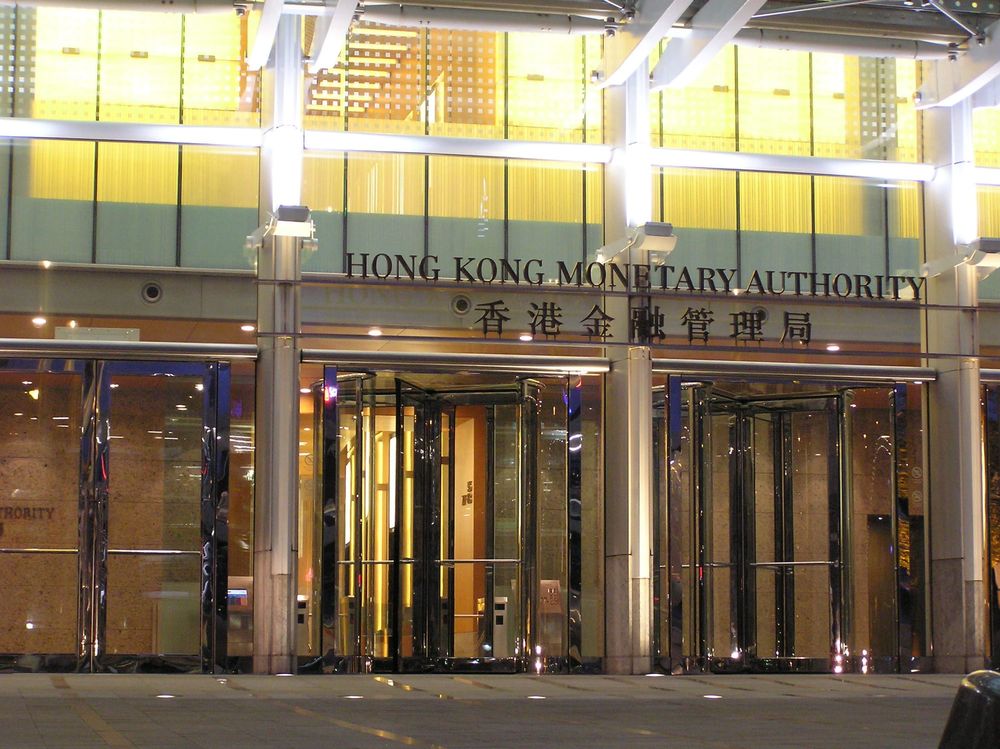
The Hong Kong Monetary Authority reduced its Base Rate by 25 basis points to 4.00% on 11 December 2025, in an automatic adjustment that followed the United States Federal Reserve's decision to lower its own target rate on the same day. The move brings the Base Rate to its lowest level since October 2022 and represents the third HKMA rate reduction in 2025, continuing the easing that began when the Fed commenced its own rate-cutting cycle.
Under Hong Kong's Linked Exchange Rate System, the HKMA's Base Rate adjusts in lockstep with the Fed funds target rate to preserve the Hong Kong dollar's peg to the US dollar within a tight trading band. The HKMA cited this alignment explicitly, noting that the December adjustment is a direct consequence of the Federal Reserve's decision and the operating mechanics of the currency board arrangement that has anchored Hong Kong's monetary system since 1983.
LINKED EXCHANGE RATE SYSTEM DICTATES THE MOVE
The Linked Exchange Rate System means that Hong Kong does not set monetary policy independently in the conventional sense. Rather than calibrating rates primarily on the basis of domestic inflation or growth conditions, the HKMA adjusts the Base Rate to maintain the integrity of the peg, which holds the Hong Kong dollar within a trading band of 7.75 to 7.85 against the US dollar. Preserving that band is the central monetary policy objective under the currency board framework, and it takes precedence over any independent assessment of Hong Kong's domestic economic cycle.
This arrangement has provided Hong Kong with a credible and transparent monetary anchor across multiple economic cycles, facilitating the city's role as one of Asia's premier international financial centres and trade hubs. The trade-off inherent in the design is that Hong Kong's monetary conditions are shaped primarily by US economic priorities rather than purely local factors, which can create periods of excess accommodation or undue restriction when the two economies are not moving in synchrony.
With the Federal Reserve embarking on an easing cycle that began in the latter part of 2024, Hong Kong has been a passive but direct beneficiary of lower US rates, with each Fed cut flowing automatically into the local Base Rate. Three reductions in 2025 bring cumulative easing from the peak to a level that is beginning to be felt across the territory's credit markets.
THIRD CUT OF 2025 LOWERS RATES TO 2022 LOWS
The Base Rate at 4.00% reflects the three HKMA reductions in 2025, which together amount to 75 basis points of easing for the year. For Hong Kong's banking sector, the lower Base Rate influences the interbank funding environment and exerts downward pressure on best lending rates that retail and commercial banks charge on mortgages, personal loans, and corporate facilities, though the relationship between the Base Rate and prime lending rates involves a degree of discretion on the part of individual banks.
Hong Kong's property market and broader credit conditions will be monitored in the context of the more accommodative Base Rate environment. Commercial banks in the territory set their own prime rates independently, and movements in the Base Rate do not automatically and immediately translate into equivalent reductions in customer-facing lending rates. Financial institutions and borrowers will nonetheless be weighing whether the cumulative effect of three 2025 reductions creates a meaningfully easier credit environment as the year draws to a close.