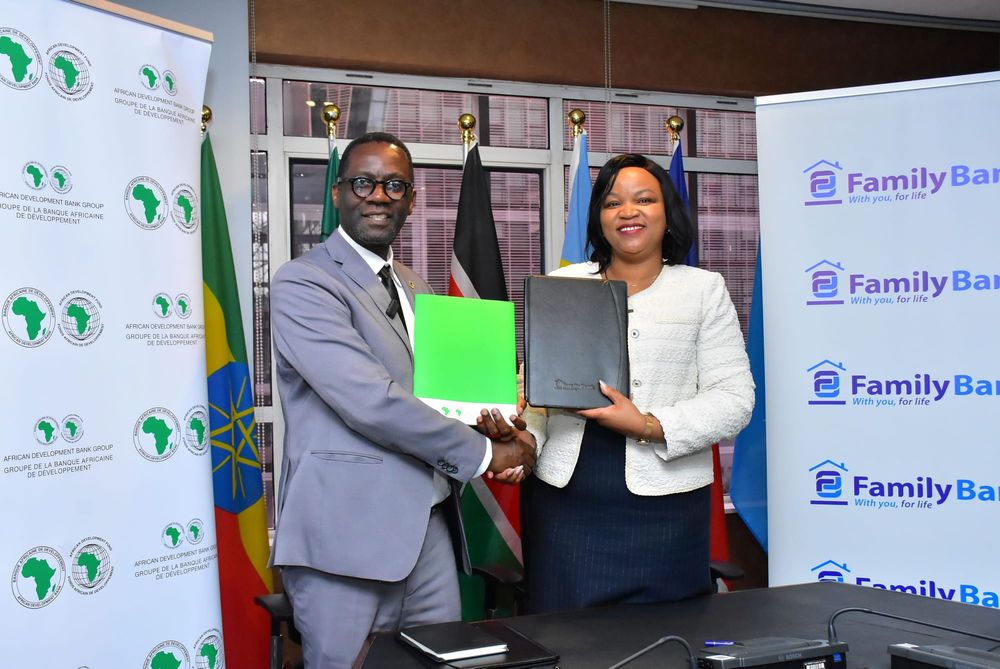
Kenya's Family Bank has signed a $10 million trade finance line of credit with the African Development Bank. The facility will provide foreign-currency funding for small and medium-sized enterprises and local companies. It targets manufacturing, agriculture, health, renewable energy and general commerce. Women-owned and women-led businesses are also included.
The lender said micro, small and medium-sized enterprises account for more than 80% of its customer base. The African Development Bank estimates Africa's trade finance gap at more than $74 billion. The AfDB approved a $30 million Family Bank trade-and-SME package in 2023, including this $10 million trade-finance line, a $10 million transaction guarantee and a separate $10 million targeted credit line. Family Bank listed on the Nairobi Securities Exchange in June 2026, expanding the market scrutiny of its lending strategy.
FOREIGN-CURRENCY FUNDING
The credit line is designed to fund the import trade finance needs of Kenyan businesses. Foreign-currency access can help importers settle cross-border transactions without relying entirely on a bank's short-term domestic deposits. Family Bank will determine which eligible customers receive financing under the facility.
The agreement follows a separate $20 million trade finance facility that Family Bank secured from British International Investment in July 2025. The 2026 signing operationalises the trade-finance tranche of the AfDB package approved in 2023, while the BII facility is separate. It also supports trade within Africa under the African Continental Free Trade Area framework.
DELIVERY WILL DETERMINE IMPACT
The facility could widen access to trade finance for smaller Kenyan companies that face foreign-currency and tenor constraints. Its effect will depend on pricing, borrower eligibility and the pace at which Family Bank deploys the funds. Neither institution disclosed those operating details in the announcement.
Investors and borrowers will next look for evidence of drawdowns and lending to the stated sectors. Reporting on beneficiary numbers, loan sizes and repayment terms would show whether the line is reaching smaller firms and women-led businesses. Family Bank's subsequent financial disclosures should provide the clearest test of implementation.