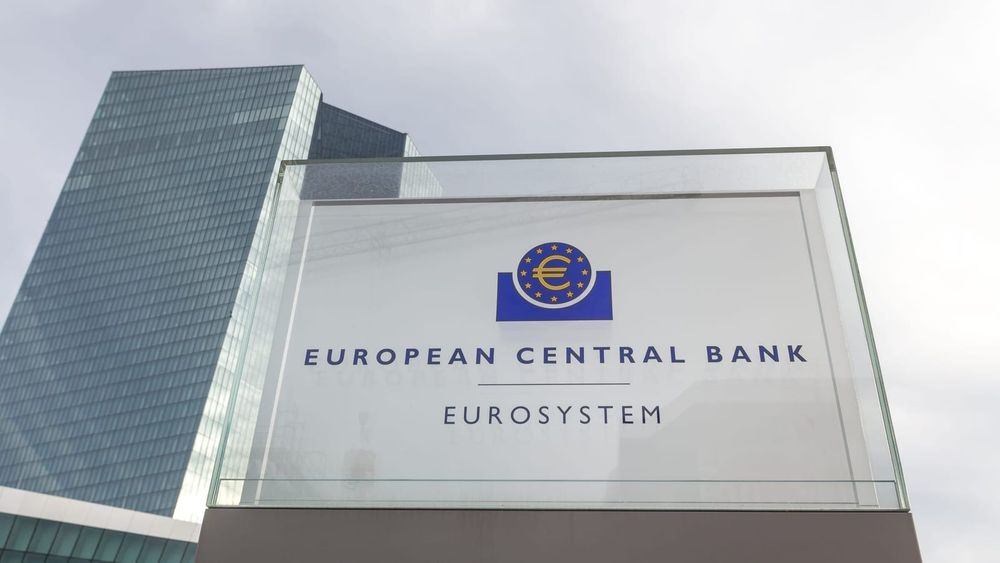
European Central Bank President Christine Lagarde told the International Monetary and Financial Committee on 17 October that the energy shock is too large to "look through". She argued that a measured response remains appropriate to keep inflation in check. The bank raised its three key rates by 25 basis points in June and again in September, lifting the deposit facility rate to 2.50 percent, 0.50 points above the 2.00 percent it stood at before June.
Lagarde said financing conditions have tightened, with long-term interest rates rising notably since the September meeting. She said this will slow growth and reduce pass-through by more than projected in the staff's September exercise. It would also make it harder than the ECB had projected last month for consumers to absorb higher fuel prices from the Iran war.
INFLATION RUNNING ABOVE STAFF EXPECTATIONS
September's headline inflation of 3.8 percent, confirmed by Eurostat on 16 October, is already 0.2 points above the staff's expected fourth-quarter 2026 peak of 3.6 percent, although a single month and a quarterly average are not strictly comparable. Energy inflation reached 18.9 percent in September, more than 3.9 points above the staff's peak expectation of almost 15 percent at the end of the year. It has swung by 22.9 points since January, when it stood at minus 4.0 percent.
Lagarde set the policy case against the bank's three criteria: the inflation outlook and its risks, underlying inflation, and the strength of transmission. On underlying inflation, she said there is no evidence at this stage of significant pass-through of energy prices to other prices and wages beyond what the projections already include. Wages have so far shown no material response to the shock, and the ECB's wage tracker points to a modest uptick to 2.7% in negotiated wage growth in the first half of 2027.
YIELDS, RATE PATH AND THE NEXT MOVE
The ECB's all-issuer euro area 10-year spot rate stood at 3.86 percent on 9 September, the eve of the decision, and 3.95 percent on decision day. It reached 4.19 percent on 1 October, its highest reading since the decision and 0.24 points above the decision-day level, before easing to 4.00 percent on 15 October.
The September increase, on Thursday 10 September, was the second of the year. It took the policy rate up by a quarter point to 2.50% in an effort to quell an energy-driven rise in inflation triggered by the Iran war. The Governing Council said then that it was not pre-committing to a particular rate path, and the euro area economy had proved resilient in the second quarter despite headwinds from the energy shock.
A further hike is expected in December, which would take the policy rate to 2.75%, a level the ECB considers restrictive. Another ECB policymaker hinted at more tightening ahead, while adding that the central bank would decide at each meeting based on incoming data.
STAFF SCENARIOS AND FISCAL ASSUMPTIONS
The staff baseline projects euro area growth of 0.9 percent in 2026, 1.4 percent in 2027 and 1.5 percent in 2028. Unemployment falls from 6.2 percent this year to 5.9 percent in 2028. In the severe scenario, inflation in 2027 would be 2.9 points above the baseline and growth 1.0 point below it, at 0.4 percent.
The projections assume Brent crude averages 89.5 dollars a barrel in 2026, before easing to 78.0 dollars in 2027 and 73.6 dollars in 2028. Dutch gas is assumed at 51.0 euros per megawatt hour in 2026, falling to 30.3 euros in 2028.
On fiscal policy, Lagarde asked that any response to the energy shock be temporary, targeted and tailored. The staff baseline includes temporary energy support worth 0.1 percent of GDP, a deficit of 3.6 percent of GDP this year peaking at 3.7 percent in 2027, and a debt ratio rising from 87.1 percent in 2025 to 89.4 percent in 2028.
BANK BUFFERS AND PAYMENTS INFRASTRUCTURE
Euro area banks keep strong capital and liquidity buffers, Lagarde said, and the region's financial institutions have limited direct exposure to private credit. She also noted that Pontes went live on 21 September.
More than 30 central banks have expressed interest in EUREP, the Eurosystem repo facility for central banks, in the past six months. The Governing Council set its operational features and onboarding process in July. On retail payments, the Eurosystem will run a 12-month internal pilot of the digital euro in the second half of 2027, and adopting the regulation establishing it by the end of 2026 is key to making that possible.
Related: European central banks propose flexible MiCA liquidity rules for stablecoins