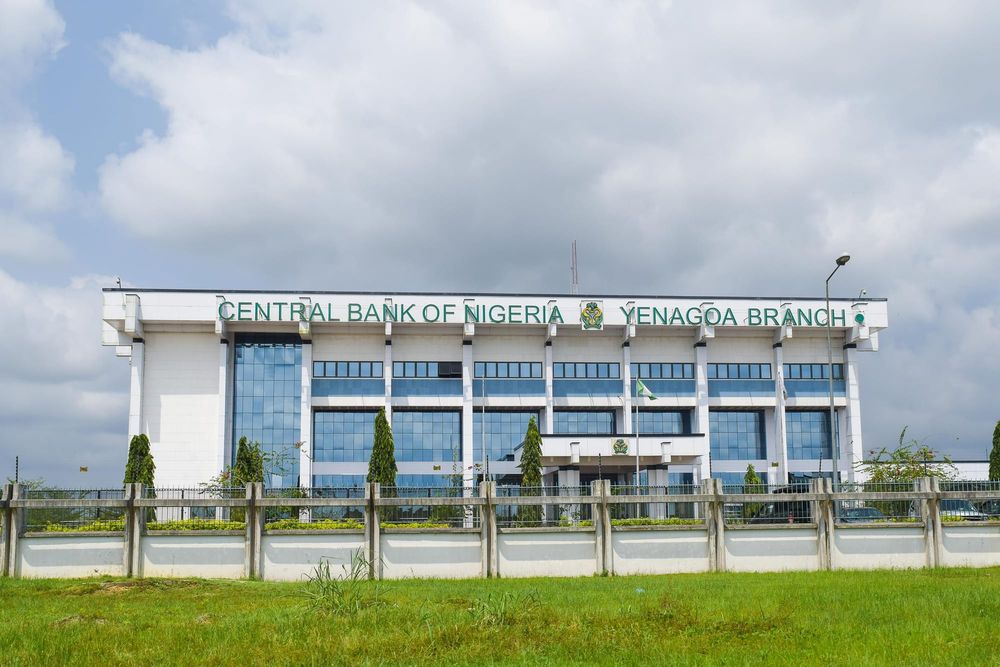
The Central Bank of Nigeria (CBN) says the country's banking sector raised N4.65 trillion in fresh capital through its recapitalisation exercise, while headline inflation declined to 14.63 per cent in September. Governor Olayemi Cardoso announced the figures at a news briefing on Saturday, following Nigeria's participation in the 2026 Annual Meetings of the IMF/World Bank Group in Bangkok, Thailand.
Cardoso said external reserves had risen above 55 billion dollars, the highest level in 18 years, while formal remittance inflows were approaching one billion dollars monthly. He also cited the September reduction of the monetary policy rate from 26.5 per cent to 23 per cent as an example of the importance of credible institutions and clear policy communication.
RECAPITALISATION CONCLUDES WITH 33 BANKS COMPLIANT
The recapitalisation initiative concluded on 31 March 2026, with Nigerian banks raising a total of 4.65 trillion naira ($3.38 billion) in new capital. In all, 33 banks met the revised minimum capital requirements set by the CBN. The 2024 programme differed significantly from the 2005 exercise, which saw numerous mergers and acquisitions in the Nigerian banking sector.
Under the new rules, commercial banks with international authorisation must maintain a minimum capital base of N500 billion, while those with national authorisation require N200 billion. Minimum capital adequacy ratio thresholds remain at 10% for regional and national banks and 15% for banks with international authorisation.
RATINGS AGENCIES AND THE ROAD TO INVESTMENT GRADE
The governor cited Fitch Ratings' revision of Nigeria's sovereign outlook from stable to positive as evidence of growing international recognition of the country's economic progress. Discussions with international credit rating agencies, including Standard & Poor's and Moody's, focused on Nigeria's economic outlook and the pathway towards achieving investment-grade ratings in the medium term.
PRIORITIES AFTER A PERIOD OF ADJUSTMENT
Cardoso acknowledged the patience and resilience of Nigerians during a difficult period of economic adjustment. He said the priority was to consolidate the gains and translate them into increased investment, productivity and sustainable economic growth. The CBN's priorities remain price stability, monetary discipline and safeguarding the stability of the financial system, with single-digit inflation as its medium-term objective.
According to the governor, the engagements underscored the importance of policy consistency, credible institutions and effective coordination between fiscal and monetary authorities. "Emerging economies must look beyond surviving crises and focus on building productive, competitive and resilient economies capable of withstanding future shocks," he said. On artificial intelligence, he said Africa could not afford to remain a passive participant but must develop the capacity to shape its opportunities and capture the economic value it creates.
ENGAGEMENTS IN BANGKOK AND LINKS WITH ASIA
Cardoso said the Nigerian delegation used the annual meetings to engage international partners on the country's economic outlook, policy priorities and challenges confronting the global economy. He participated in IMF discussions on the global economy, sharing Nigeria's experiences and lessons for emerging economies, particularly in Africa. At an IMF seminar on central bank decision-making under uncertainty, he discussed the CBN's experience in strengthening monetary policy decision-making, transparency and communication.
To deepen Nigeria's financial relationships with Asia, the delegation engaged the Monetary Authority of Singapore and signed a memorandum of understanding with a global financial technology network. It also convened the Nigeria-Asia Financial Connectivity Dialogue in collaboration with JPMorgan, the Nigerian Exchange Group and FMG Group.
Cardoso met Pan Gongsheng, Governor of the People's Bank of China, to discuss strengthening financial cooperation in cross-border payments, settlement arrangements, financial technology and trade finance. He said Nigeria would build on those discussions during an upcoming visit to Beijing, with emphasis on facilitating cross-border payments, supporting trade and investment, and strengthening financial intermediation between the two countries.
Related: Central Bank of Nigeria discloses N430 million in fines on banks for complaints-handling failures