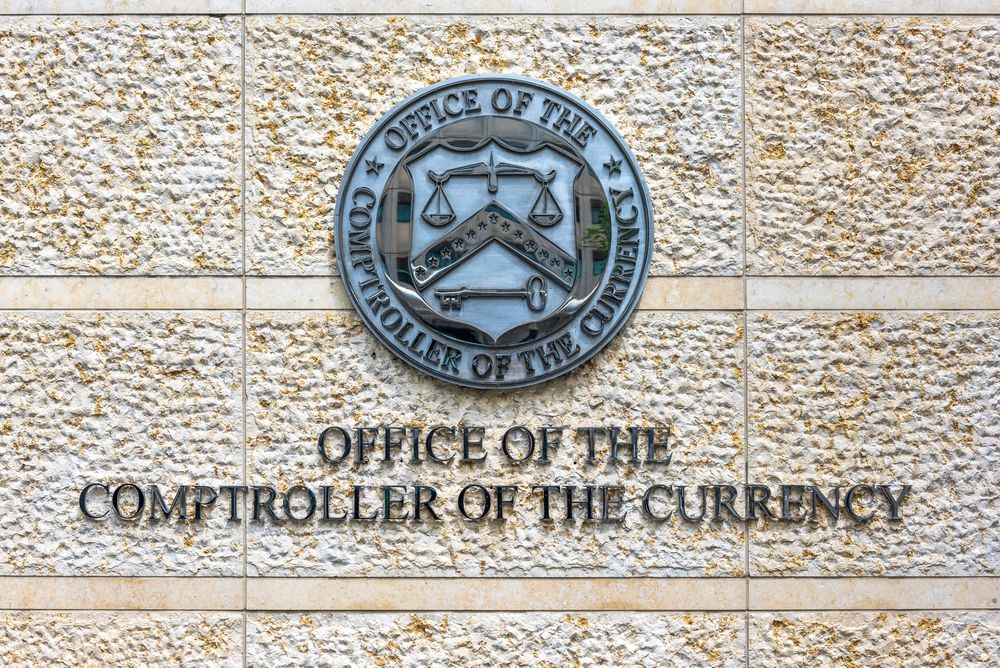
The Office of the Comptroller of the Currency has finalised Cease and Desist Orders against three Texas community banks — First National Bank of Shiner, Bank of Brenham N.A., and First National Bank of Bellville — all wholly owned subsidiaries of Industry Bancshares, Inc., headquartered in Industry, Texas. The orders, resolved in November 2024, arose from Notices of Charges that the OCC had filed on 2 January 2024 under dockets AA-SO-2023-55, AA-SO-2023-56, and AA-SO-2023-57. The resolution of those notices through binding cease-and-desist orders signals the regulator's determination to compel structural changes at all three institutions.
The OCC found that each of the three banks had adopted investment strategies heavily concentrated in long-term fixed-rate securities, exposing them to excessive interest rate risk. Beyond the investment concentration concerns, the regulator cited corporate governance failures across all three institutions. Bank of Brenham N.A. and First National Bank of Bellville faced the additional finding of credit administration weaknesses, suggesting that examiners viewed the problems as systemic rather than confined to a single area of each bank's operations.
LONG-TERM SECURITIES AT THE HEART OF THE CASE
Holding a large proportion of a bank's assets in long-dated, fixed-rate securities creates material duration risk: when market interest rates rise, the market value of those holdings declines, eroding unrealised capital positions and potentially restricting the bank's capacity to meet deposit outflows without crystallising losses. The OCC's charges against the Industry Bancshares subsidiaries were filed in early 2024, following a period in which the US Federal Reserve had raised interest rates sharply and at pace, dramatically amplifying the vulnerabilities of community banks carrying poorly managed asset-liability mismatches on their balance sheets.
The OCC noted that the actions reflect its heightened scrutiny of community banks carrying Silicon Valley Bank-style interest rate risk concentrations. The failure of Silicon Valley Bank in March 2023, which collapsed in part because it had concentrated its balance sheet in long-dated government securities that fell sharply in value as rates rose, had prompted supervisors nationally to intensify reviews of similar concentration risks at smaller depository institutions. The Industry Bancshares subsidiaries represent a case where that supervisory follow-through has culminated in formal enforcement action.
GOVERNANCE AND CREDIT ADMINISTRATION ALSO CITED
The governance failings identified at all three banks extend the regulatory concern beyond the investment portfolio. Effective board oversight of interest rate risk requires directors to understand, challenge, and set clear limits on the types and concentrations of securities that management is authorised to hold. Where governance structures fail to provide that check, unsafe investment practices can persist unchallenged for extended periods — precisely the dynamic the OCC's charges appear to describe in the Industry Bancshares context.
The additional credit administration findings at Bank of Brenham N.A. and First National Bank of Bellville indicate that those institutions face a broader remediation task than First National Bank of Shiner. Credit administration deficiencies can encompass weaknesses in loan underwriting standards, documentation practices, risk rating accuracy, and the monitoring of problem loans. Industry Bancshares and its subsidiaries must now implement OCC-approved corrective measures across all the cited areas, with boards directly accountable for progress. The cease-and-desist mechanism gives the OCC enforceable authority to accelerate that process or impose further sanctions if the pace of improvement proves inadequate.