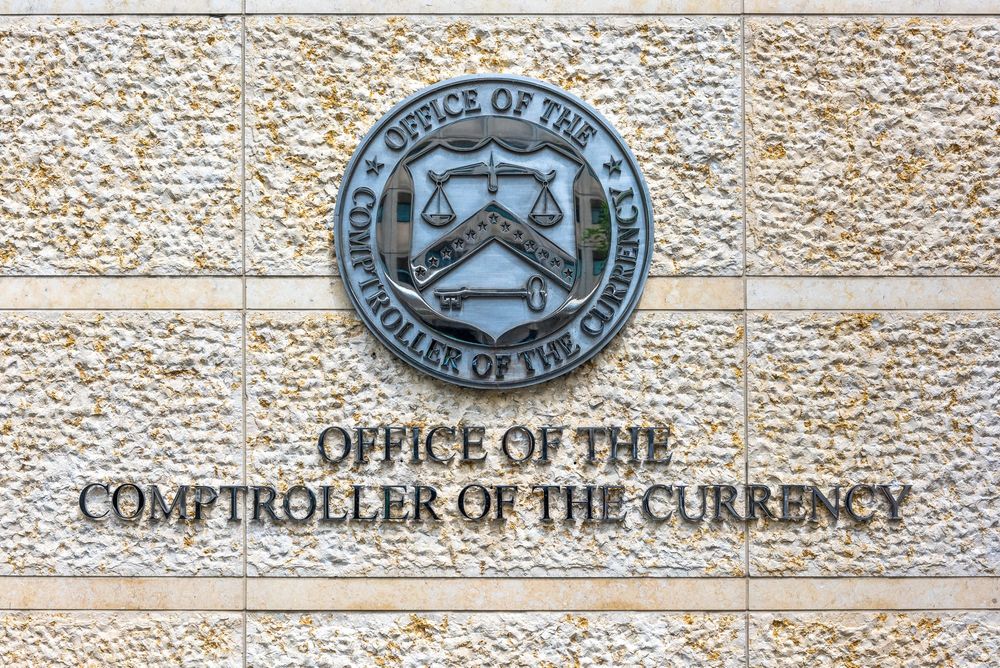
The Office of the Comptroller of the Currency has entered into formal agreements with two community national banks following supervisory examinations that identified material safety and soundness deficiencies at each institution. The Fairfield National Bank of Fairfield, Illinois, and The First National Bank of Williamson of Williamson, West Virginia, were both subject to enforcement actions announced by the OCC on 19 December 2024.
Formal agreements are enforceable supervisory tools through which the OCC requires a bank's board of directors and senior management to commit to defined corrective action programmes. They sit below a cease-and-desist order in terms of regulatory severity but are legally binding and publicly disclosed, making them a significant enforcement development for the institutions involved. For community banks, which depend heavily on local relationships and depositor confidence, a published formal agreement carries reputational implications beyond the operational requirements it imposes.
DISTINCT DEFICIENCIES AT EACH INSTITUTION
The Fairfield National Bank's formal agreement, filed under Docket AA-CE-2024-90, addresses deficiencies in staffing adequacy, credit underwriting standards, and credit administration practices. Weaknesses in credit underwriting and administration are among the most consequential findings the OCC can make about a community bank, as they bear directly on the quality of the loan portfolio — typically the dominant asset and the primary source of both income and credit risk for a smaller institution. The agreement also found that the bank had failed to file correct Call Reports — the quarterly regulatory submissions that national banks are required to submit accurately and on time. Errors in Call Report data compromise the integrity of supervisory information used by regulators to assess bank conditions and systemic risk.
The First National Bank of Williamson's agreement, filed under Docket AA-NE-2024-93, covers a broader set of concerns: staffing, capital planning, strategic planning, interest rate risk management, and audit failures. The presence of capital planning and interest rate risk management among the cited weaknesses is notable, as both are areas of heightened supervisory attention for community banks that may hold substantial fixed-rate loan or bond portfolios in an environment where interest rates have risen considerably from their historic lows. A bank without adequate capital planning and interest rate risk frameworks may be ill-equipped to absorb the impact of adverse rate or credit scenarios.
The audit failures identified at the Williamson bank compound the governance concerns: an internal audit function that does not operate with sufficient rigour or independence cannot provide the assurance that a bank's board needs to exercise effective oversight of management and risk. Together, the findings at both institutions reflect the kind of compounding governance and operational weaknesses that attract formal supervisory intervention when identified through OCC examination.
CORRECTIVE OBLIGATIONS AND SUPERVISORY CONTEXT
Both agreements require the bank boards and senior management to develop and implement comprehensive corrective action plans across the areas identified in the examination findings. The OCC will monitor progress against those plans and retains the authority to escalate enforcement action if remediation is not achieved within timelines it considers adequate. The requirements placed on each institution are tailored to the specific findings of the examination that preceded the formal agreement.
The announcement of simultaneous formal agreements with two community banks on 19 December 2024 reflects the OCC's stated commitment to applying safety and soundness supervision consistently across the full population of nationally chartered institutions, from the largest globally systemic banks to the smallest community lenders. The agency has signalled that staffing adequacy, credit risk discipline, accurate regulatory reporting, and interest rate risk governance are among the examination priorities receiving heightened attention — issues of direct relevance to community banks navigating a challenging operating environment of compressed margins, competitive funding pressures, and tightening credit conditions heading into 2025.