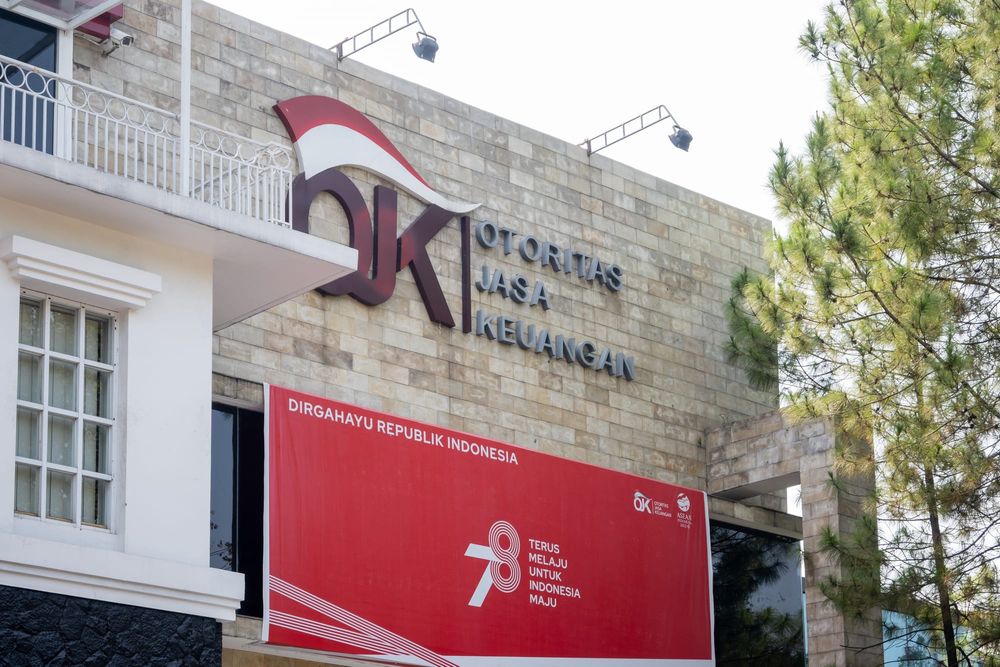
Indonesia's Financial Services Authority, Otoritas Jasa Keuangan, issued Regulation No. 30 of 2024 in December 2024, establishing a revised supervisory framework for financial conglomerates and financial holding companies operating in the country. The regulation supersedes OJK Regulation 45/POJK.03/2020 and implements the requirements set out in Indonesia's Financial Sector Development and Strengthening Law, known as the P2SK Law, which mandated a comprehensive overhaul of financial sector regulation across the archipelago.
The P2SK Law, enacted to modernise Indonesia's financial regulatory architecture, assigned the OJK responsibility for developing more detailed rules governing the organisation and oversight of complex financial groups. Regulation 30/2024 represents the OJK's fulfilment of that mandate in respect of conglomerate structures, introducing requirements designed to improve the coherence, accountability and systemic resilience of large multi-entity financial groups operating under common ownership.
CONTROLLING SHAREHOLDERS AND BENEFICIAL OWNERS IN FOCUS
A central element of the new regulation is the imposition of specific requirements on Controlling Shareholders, referred to as PSP in the Indonesian regulatory framework, and on ultimate beneficiary owners within conglomerate structures. These provisions reflect a global regulatory shift towards improving transparency about who ultimately controls and benefits from large financial groups, a priority that has become particularly prominent in the context of anti-money laundering enforcement and the oversight of related party transactions.
By requiring conglomerates to identify and disclose their controlling shareholders and ultimate beneficiary owners, the OJK is aligning Indonesian financial supervision more closely with the standards advocated by the Financial Action Task Force and with practices adopted in more mature regulatory jurisdictions. The transparency requirements reduce the ability of complex ownership structures to obscure the identity of those exercising actual control over systemically significant financial institutions that hold public deposits and perform critical economic functions.
Financial holding companies operating under the regulation face requirements relating to corporate governance, risk management and the management of intra-group transactions and exposures. These provisions are intended to prevent the kind of contagion effects that can arise when a distressed subsidiary within a group imposes losses on other entities, including those holding retail deposits. Proper ring-fencing of risks within a holding company structure has been a recurring lesson drawn from international financial crises, and Indonesian regulators have applied those lessons to the domestic context.
IMPLEMENTATION AND MARKET IMPLICATIONS
The supersession of OJK Regulation 45/2020 signals that the regulator regards the prior framework as insufficient to address the governance and supervisory challenges posed by increasingly complex Indonesian financial conglomerates. Indonesia's financial sector has grown substantially, with several major banking groups operating alongside insurance, securities and leasing subsidiaries under common ownership. The updated regulation creates clearer accountability chains and governance responsibilities within these structures, bringing greater order to conglomerate supervision.
For financial conglomerates affected by the regulation, compliance will require a review of governance arrangements, ownership disclosure practices and the management of inter-company relationships. Groups that have historically operated with limited formal conglomerate-level oversight will need to establish or strengthen the holding company governance structures contemplated by the regulation. The OJK is expected to issue supplementary guidance to assist institutions in interpreting specific provisions and managing the transition to full compliance with the new framework.