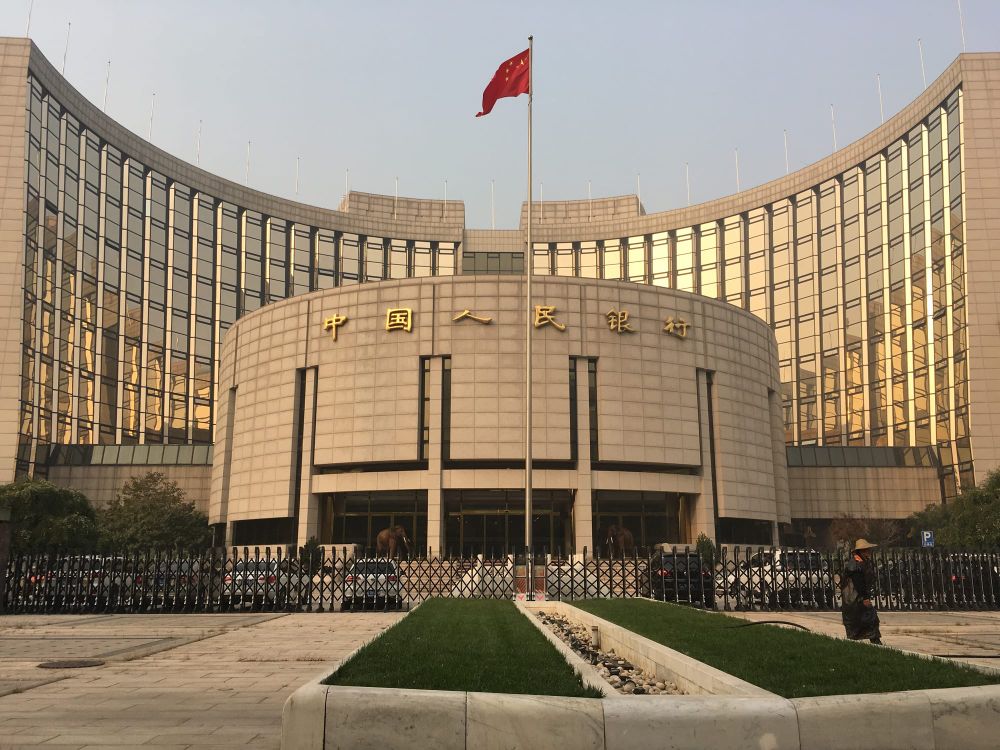
The People's Bank of China announced on 23 October that it will conduct a 700 billion yuan (approximately $105.1 billion) one-year medium-term lending facility (MLF) operation on 26 October. The operation will use a fixed-quantity, rate-tender, multiple-price auction. The PBOC said the aim is to keep liquidity in the banking system ample.
With 900 billion yuan (approximately $135.1 billion) of MLF maturing in October, the operation amounts to a net withdrawal of 200 billion yuan (approximately $30.0 billion). That compares with September, when the PBOC increased its MLF rollover volume by 200 billion yuan.
REVERSE REPOS OFFSET THE CONTRACTION
On the surface MLF volume is shrinking, but outright reverse repos across both tenors have already injected 400 billion yuan (approximately $60.1 billion) in October. After offsetting the MLF contraction, the month still delivers a net injection of medium-term liquidity of 200 billion yuan. That is the fourth consecutive monthly net injection and is unchanged from September.
WHY THE WITHDRAWAL IS MODEST
Wang Qing, chief macro analyst at Golden Credit Rating, told Jiemian News that three considerations lie behind this month's 200 billion yuan net MLF withdrawal. The second is that policy bond issuance has been relatively moderate recently, so a modest MLF contraction will not impede the smooth issuance of government bonds.
The third is that market liquidity has been on the loose side since the holiday. The DR001 rate has run below 1.30% since 10 October, which is below the policy rate midpoint.
The PBOC also said on 19 October that it "will study switching the tenor of the PBOC's main open market operation instruments to overnight at an appropriate time". According to the report on which this article draws, that shifted market liquidity expectations toward easing, making the signal sent by the MLF contraction more pronounced.
POLICY TONE AND THE RESERVE RATIO
The PBOC's China Monetary Policy Report for the second quarter of 2026 set the broader tone. It said the central bank will fully leverage the effectiveness of existing policies and promptly plan and introduce pragmatic and effective incremental policies. It also pledged to step up countercyclical adjustment and intensify efforts to expand domestic demand and optimise supply.
Liquidity support is still needed, as fourth-quarter government bond financing peaks and 800 billion yuan (approximately $120.1 billion) of New Policy-based Financial Instruments are deployed. A cut in the reserve requirement ratio may therefore be delayed.