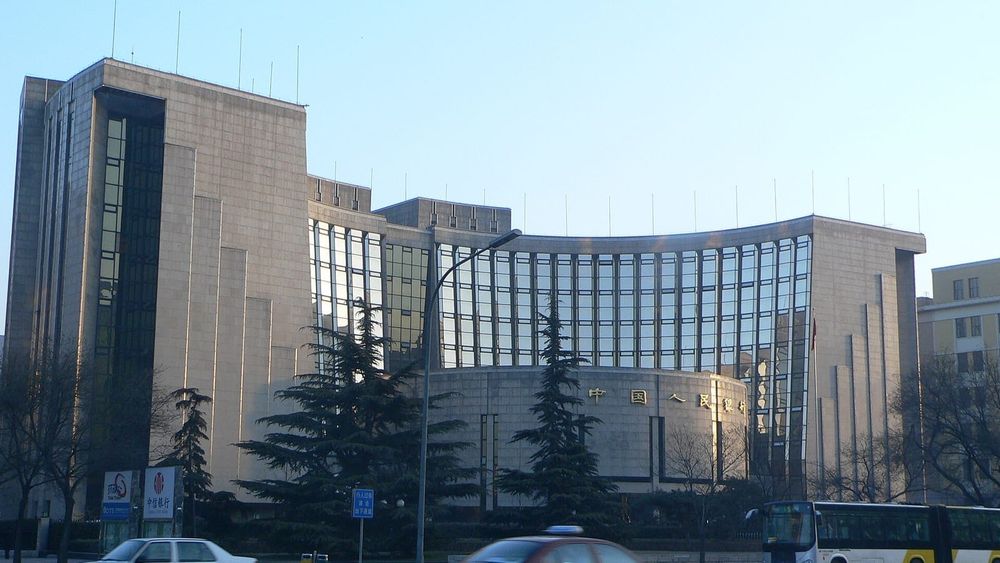
The People's Bank of China has signalled a shift toward a single interest rate benchmark as part of a policy reform. Governor Pan Gongsheng hinted at a transition to an overnight policy-rate framework when he unveiled measures on 17 June aimed at upgrading the central bank's toolkit and making yuan-denominated assets more attractive to overseas investors.
The overnight reverse repo tool is already in use. The PBOC injected 600 billion yuan through the operations, double the amount of its debut operation on Monday, and kept the borrowing cost at 1.25%.
LIQUIDITY MANAGEMENT, NOT RATE TARGETING
The PBOC's deputy governor said the overnight reverse repurchase operations are designed to target liquidity management rather than interest rate levels. The bank said in mid-June that it would begin to use the operations, which were introduced in 2024 but which it had never actually used.
In a statement, the PBOC said it would conduct overnight reverse repurchases in open market operations on 29 June and 30 June.
CORRIDOR NARROWS TO 50 BASIS POINTS
The PBOC plans to set rates on the temporary overnight repo and reverse repo operations at 25 basis points below and above the seven-day reverse repo rate, respectively. That narrows the interest rate corridor from 70 basis points to 50 basis points. Previously, the ad hoc repo rate was 20 basis points below the policy rate and the ad hoc reverse repo rate was 50 basis points above it.
The central bank will initiate operations when DR001, the rate on overnight repos between depository institutions, continues to deviate from the ad hoc repo rate, to keep it within the corridor. The operation window for ad hoc repo and reverse repo transactions has moved one hour earlier, to between 3:00 p.m. and 3:30 p.m.
OVERNIGHT TRADING DOMINATES THE MONEY MARKET
Overnight operations have accounted for nearly 90% of repo transactions in China's money market in recent years. For years, however, the seven-day interbank collateralised lending rate, known as DR007, has been the benchmark for pricing short-term credit.
On 17 June the central bank said it was deepening control over short-term money markets and tying overnight borrowing costs more closely to its benchmark seven-day reverse repo rate. Speaking the same day at the Lujiazui Financial Forum, Pan said the PBOC will introduce more varieties of overnight reverse repos into open market operations.
WIDER PACKAGE UNVEILED AT LUJIAZUI FORUM
The PBOC announced six policy measures at the opening of the 2026 Lujiazui Forum in Shanghai on 17 June. One is the RMB Repo Facility for Foreign and International Monetary Authorities, or FIMA RMB Repo, which lets foreign central banks and financial organisations obtain yuan liquidity against government bond holdings.
The package also includes an offshore RMB foreign exchange trading pilot in the China (Shanghai) Pilot Free Trade Zone, intended to promote two-way opening-up of the foreign exchange market and greater integration between onshore and offshore markets. Six banks will be authorised to conduct offshore RMB foreign exchange transactions through the China Foreign Exchange Trade System: Industrial and Commercial Bank of China, Agricultural Bank of China, Bank of China, China Construction Bank, Bank of Communications and China CITIC Bank.