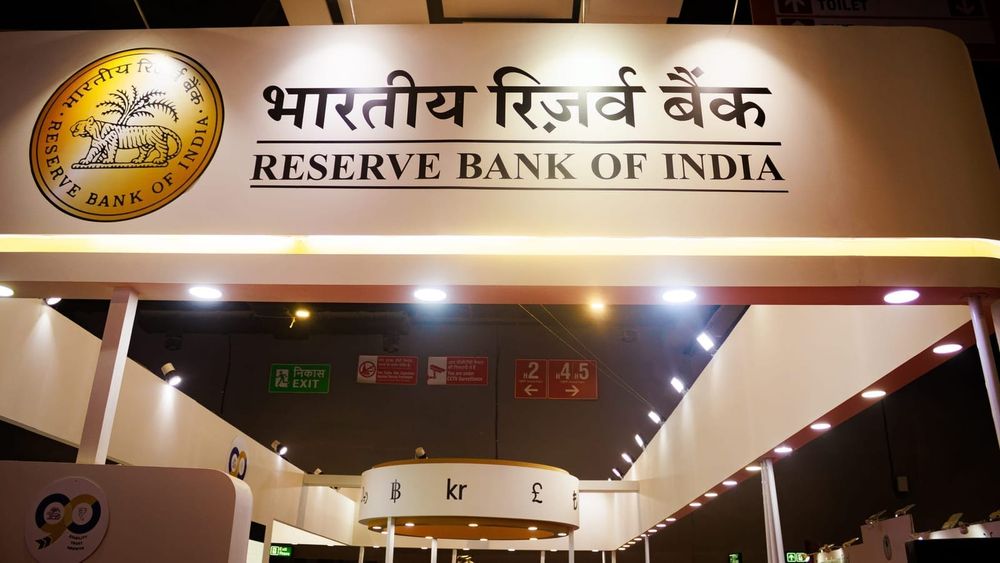
The Reserve Bank of India injected ₹1 trillion into the banking system through a seven-day repo auction on Monday, 19 October, to ease cash pressure from tax outflows. It is the central bank's first liquidity infusion in over three months, signalling a shift from draining surplus funds to managing market volatility.
The move came as banks faced a sudden need for funds ahead of large tax payments, which typically drain cash from the market. Demand was strong, with banks placing bids for more than ₹1.5 trillion, showing a significant appetite for immediate cash.
CALL MONEY RATE BREACHES THE CEILING
Short-term borrowing costs between banks have risen steadily throughout October. On the previous Friday, the weighted average interbank call money rate, the rate banks charge each other for overnight loans, climbed above the Marginal Standing Facility (MSF) rate of 5.75%.
With the repo rate at 5.50% and short-term rates touching the 5.75% ceiling, the RBI has moved away from its strategy of aggressively absorbing surplus liquidity.
SURPLUS FALLS BELOW ₹2 TRILLION
As of 16 October, the system's total liquidity surplus had dropped below ₹2 trillion, or about 0.7% of total deposits. This indicates that the banking sector is no longer dealing with an excess of funds but is instead struggling with volatile cash levels.
The situation marks a change from the past few months, when the RBI was primarily focused on pulling out extra money from the system to keep inflation in check.
FROM ABSORBING CASH TO SUPPLYING IT
In September, the RBI announced it would drain ₹1 trillion from lenders through bond sales, to tackle a build-up of surplus cash that posed inflation risks. Reuters reported that the central bank had net sold bonds worth 1 trillion rupees this financial year, its biggest annual net bond sale in more than a decade.
The surplus was mainly due to the $127 billion FCNR(B) deposit mobilisation, according to Business Standard's background research. The RBI's average daily net absorption under the LAF rose from ₹1.2 lakh crore in July 2026 to ₹7.8 lakh crore in September 2026. Its government bond holdings climbed more than 40% last fiscal year to about 23 trillion rupees, roughly 18% of outstanding central government securities, according to Citigroup Inc.
FINE-TUNING REPLACES BLUNT INSTRUMENTS
For investors, the takeaway is that the RBI is moving toward fine-tuning its liquidity operations. Rather than using blunt tools such as selling government bonds or currency swaps to drain money, the central bank is likely to use short-term auctions to smooth out volatility.
Related: Reserve Bank of India halves liquidity surplus through bonds and swaps