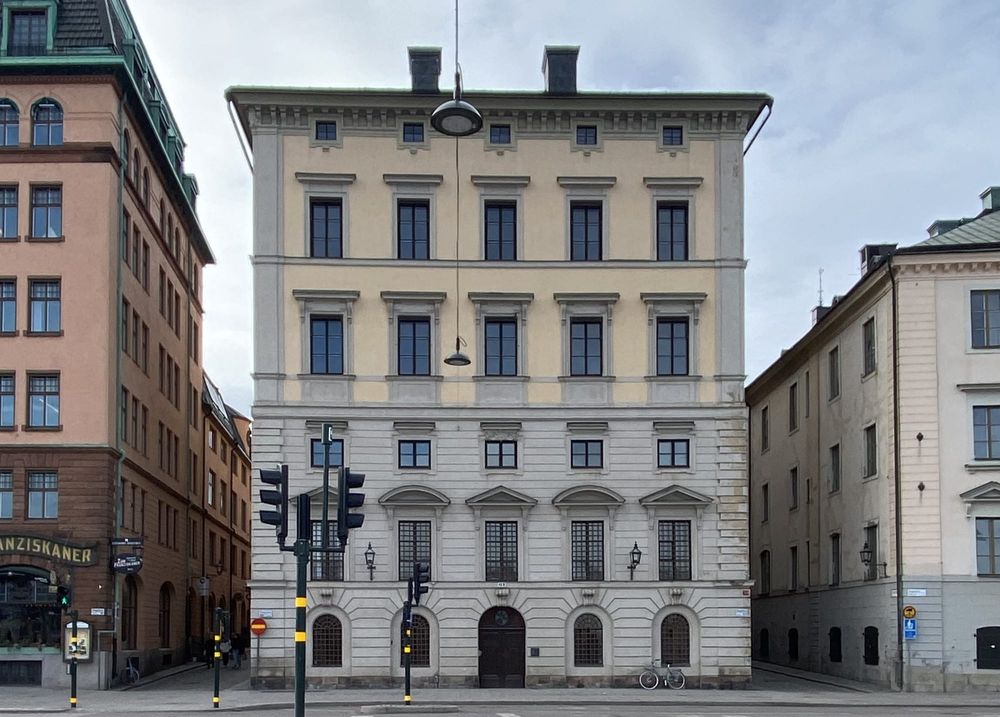
Sweden's central bank, Sveriges Riksbank, held its policy rate at 1.75 per cent at its January 2026 Monetary Policy Update, a decision that takes effect from 4 February 2026. The Executive Board's assessment was that the current rate level provides appropriate support to economic activity while remaining consistent with returning inflation sustainably to the 2 per cent target, in line with the forecasts and rate path the Riksbank had published at its December 2025 meeting. The decision was announced via a press release published on the Riksbank's website and was characterised as being in keeping with the central bank's previously communicated guidance.
The January meeting was a Monetary Policy Update rather than a full Monetary Policy Report, a distinction that reflects the Riksbank's practice of alternating between comprehensive quarterly reports and shorter interim assessments at which the Executive Board reviews incoming economic data against the most recently published forecast. At update meetings, the board determines whether developments have diverged sufficiently from the projected path to warrant a revision to the policy rate or to the forward guidance associated with it. On this occasion, the board concluded that the evidence did not justify any change, leaving the rate at 1.75 per cent and reiterating the signal that it was expected to remain at that level for some time.
INFLATION TARGET BROADLY WITHIN REACH
The decision to hold reflects a broader picture in which Swedish inflation has returned to levels broadly consistent with the Riksbank's 2 per cent target, following a prolonged period of elevated price growth that prompted the bank to tighten policy aggressively from 2022 onwards. Sweden's particular exposure to interest rate changes — arising from a housing market characterised by a high proportion of variable-rate mortgages and elevated household debt relative to income — meant that the tightening cycle had a pronounced and relatively swift impact on domestic demand, cooling activity and contributing to the disinflation that ultimately allowed the Riksbank to begin cutting rates.
The Riksbank had been among the more active rate-cutters among European central banks during 2024 and into 2025, reducing its policy rate from the restrictive levels reached at the peak of the tightening phase as inflation pressures subsided and the economy required support. The January 2026 signal that the rate is now considered to be at a level consistent with both growth support and inflation stability, and that it is expected to remain there rather than be reduced further in the near term, marks a transition from the active-easing phase to a more stable, watchful posture.
MARCH REPORT WILL SET NEXT DIRECTION
The next major communication from the Riksbank is scheduled for March 2026, when the bank will publish a full Monetary Policy Report complete with an updated macroeconomic forecast, a revised inflation projection, and a new rate path extending several quarters into the future. That publication will be the primary source of guidance for Swedish financial markets and analysts seeking to assess whether the current rate level is truly a resting point or whether the Riksbank foresees circumstances that might justify additional adjustments during the course of the year. Any material change in the inflation or growth outlook relative to the December 2025 projections would be expected to be reflected in the March report's conclusions.
For Swedish banks and the mortgage borrowers who make up a large portion of their balance sheets, the Riksbank's stable signal offers a degree of near-term predictability on funding and lending costs. The banking sector has navigated a period of significant transition as rates moved from near zero to elevated levels and then began to ease, a cycle that affected both net interest income at lenders and the debt-servicing burden on borrowers across different income levels and property price brackets. The press release published on 29 January 2026 confirmed that the rate applicable from 4 February remains 1.75 per cent, providing a firm base from which commercial lending-rate decisions will be made in the weeks that follow.