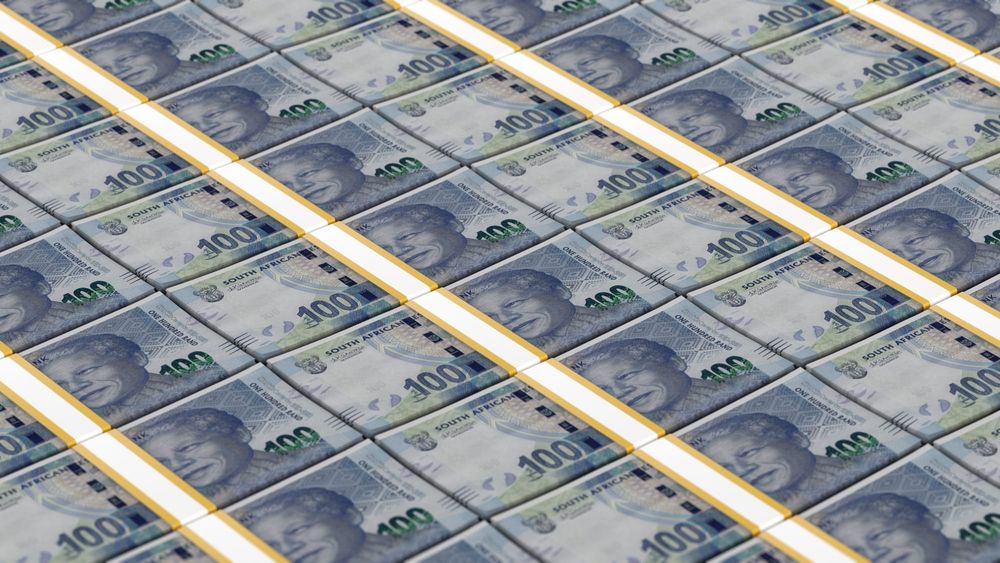
The South African rand eased after the World Bank cut its 2026 growth forecast for South Africa to 1.0% from the 1.4% it projected in January, in its Global Economic Prospects report published on 11 June 2026.
The rand traded at R16.29 against the US dollar, R18.85 against the euro and R21.84 against sterling on 12 June, MarketForces Africa reported. First National Bank described the currency as broadly resilient and comparatively stable against its peers during a period of geopolitical uncertainty.
WORLD BANK OUTLOOK
The World Bank now expects South African growth of 1.5% in 2027 and 1.7% in 2028, after an estimated 1.1% in 2025. It attributed the downgrade to the conflict in the Middle East, which has disrupted energy supplies and shipping routes, particularly through the Strait of Hormuz. It projects Brent crude at $94 a barrel in 2026, up from an earlier forecast of $86 and 36% above 2025 levels. Domestically, the lender pointed to weak investment, logistics bottlenecks, electricity constraints and high unemployment.
Globally, the World Bank expects growth to slow to 2.5% in 2026 from 2.9% in 2025, the weakest expansion since the Covid-19 pandemic.
OFFSETTING FACTORS
The rand's decline was limited as emerging-market sentiment improved on hopes of a US-Iran peace agreement, which pushed oil prices lower, with Brent at $88.71 a barrel. The South African Reserve Bank also reported a first-quarter 2026 current account surplus that exceeded consensus estimates and was the largest since 2022, driven by higher gold export values and lower imports. Gold traded at $4,193.71 an ounce after a 3.4% jump on 11 June, its largest single-day gain since March.