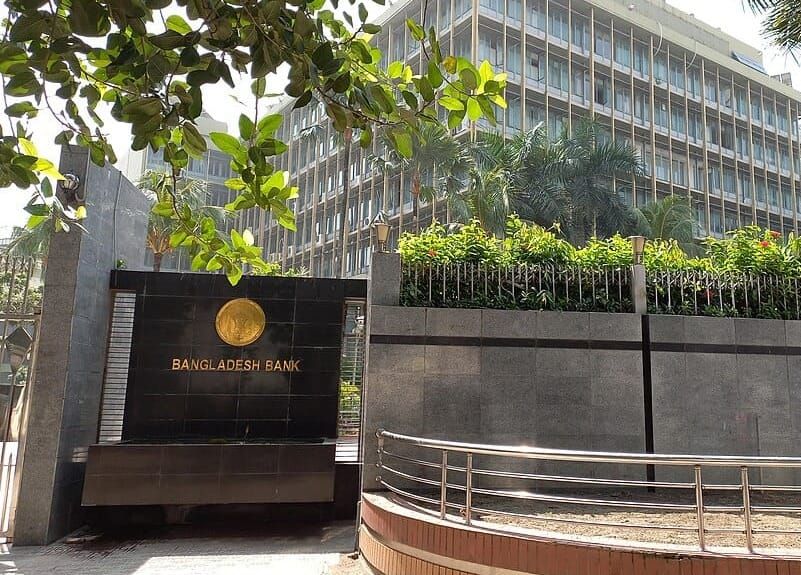
Bangladesh Bank has set out a four-year plan to stabilise the country's banking sector, built around recovery plans drawn up for individual lenders. In a press release, the central bank said it was responding to recent negative campaigns and misleading information about the sector, and it urged the public to rely on its official announcements rather than rumours or unverified information.
The plan arrives with the central bank close to finishing a diagnostic check of each bank and an asset quality review, particularly of troubled lenders. Bangladesh Bank said the review had exposed irregularities, weak loan management and deteriorating asset quality that built up over many years, and that it hopes to make significant progress on default loans by December 2026.
FROM DIAGNOSIS TO RESILIENCE
The first stage is diagnosis: a check of each bank and an asset quality review using internationally recognised methods to establish the true condition of loans and other assets. The central bank said changes in indicators such as the default loan rate reflect these long-standing weaknesses rather than activity over the past two years.
The second stage is containment. It covers emergency liquidity support and guarantees for banks facing temporary cash shortages, with the aim of protecting depositors and keeping operations running. The central bank said it had also reconstituted boards, appointed independent and suitable directors and, where necessary, replaced managing directors or chief executive officers at the lenders concerned.
The third stage focuses on stabilisation, through recovery and restructuring plans for individual banks drawn up by the central bank. These include recapitalisation with fresh capital, financial and institutional restructuring, stronger corporate governance and the management of old default loans and risky assets.
The final stage, restoring resilience, aims to build a stronger sector that can better withstand risk. It covers stronger deposit protection, recovery of default loans, discipline in lending and risk management, policy and structural reforms, and a phased return from emergency support to normal operations. The central bank named protecting depositors, keeping operations running and ensuring financial stability as its highest priorities.
A DEFAULT RATE THAT HAS RISEN EVERY YEAR
The scale of the task is clear from official figures. Defaulted loans accounted for 32.17 percent of total outstanding loans at the end of September, Finance Minister Amir Khosru Mahmud Chowdhury told Parliament.
The ratio has climbed every year in the minister's five-year comparison: 7.24 percent in 2021, 7.64 percent in 2022, 8.39 percent in 2023, 17.83 percent in 2024 and 29.92 percent in 2025.
A Special One-time Exit Facility has been introduced to resolve long-outstanding loans with little prospect of recovery by conventional means, the minister said, and under certain conditions borrowers can settle loans under it until December 2026. Banks with classified loan ratios above 10 percent were being closely supervised, he said.
The government appointed Md Mostaqur Rahman, a garment entrepreneur by profession, as governor of Bangladesh Bank for four years, replacing Ahsan H Mansur.
THE TGB VIEW
Bangladesh Bank hopes to make significant progress on default loans by December 2026, the month the Special One-time Exit Facility closes to borrowers. It starts from a default rate of 32.17 percent at the end of September, against 7.24 percent in 2021. The 10 percent classified loan ratio that triggers close supervision for individual banks sits less than a third of the way to that system-wide rate.
Related: Bangladesh Bank proposes cutting family seats on bank boards to two from three
Bank news that matters, every weekday.
Follow The Global Banker on LinkedIn