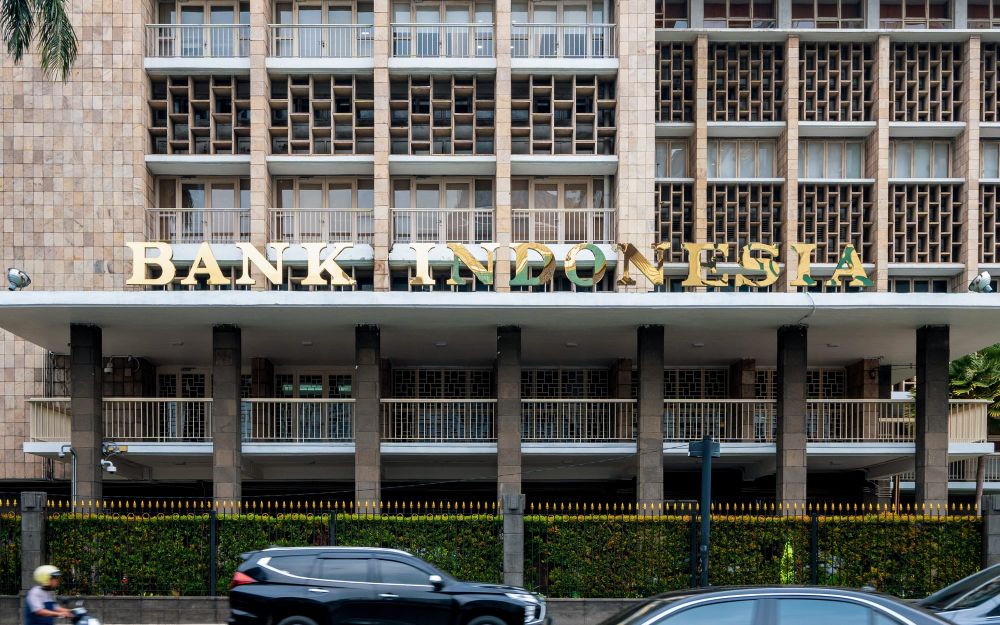
Bank Indonesia (BI) raised its benchmark rate by 25 basis points to 6.00% on Wednesday, the highest level since January 2025, resuming a tightening cycle intended to put a floor under the rupiah after the currency hit several record lows in the past week. The overnight deposit facility and lending facility rates rose by the same amount, to 5.25% and 6.75%.
The decision, taken at the Board of Governors Meeting on 17 and 18 November, caught most forecasters out. Only 10 of 27 economists polled by Reuters had predicted the increase, and the rest had expected a hold. Analysts had generally expected the rate to stay at 5.75%.
A CURRENCY UNDER PRESSURE
BI has now raised the benchmark rate by 125 basis points since May to defend the rupiah, currently the worst-performing currency in emerging Asia. The rupiah touched an all-time low of 18,285 per dollar on Tuesday and has traded near that level since.
Governor Destry Damayanti told a press conference the move was taken to bolster stability while global market conditions remain uncertain. "Going forward, Bank Indonesia will consistently direct monetary policy toward strengthening rupiah exchange rate stability to keep inflation within its target," the central bank said in a statement. It also pledged to strengthen foreign exchange interventions and liquidity support for banks.
The market reaction was muted. The rupiah posted a gain of 0.06% after the announcement, against a loss of 0.13% before the decision.
HOW THE PRESSURE BUILT
Before the meeting, the Institute for Economic and Social Research at the University of Indonesia (LPEM UI) had recommended a hold at 5.75%. It recorded a 1.72% fall in the rupiah in a month, from 17,930 per US dollar on 13 October to 18,241 on 13 November. Indonesia recorded net foreign capital outflows of about $740 million between 15 October and 10 November, $700 million of it from the stock market.
LPEM UI argued that a higher policy rate was unlikely to resolve supply-side inflation. Food, beverages and tobacco inflation accelerated to 4.82% from 4.37%, while foreign exchange reserves rose to $146.8 billion in October.
INFLATION INSIDE THE TARGET
Inflation eased to 3.23% in October, within BI's target range of 1.5% to 3.5%, and the economy grew 5.47% year on year in the third quarter, up from 5.29% in the previous three months. BI described the increase as a pre-emptive step to keep inflation within its target of 2.5%, plus or minus one percentage point, in 2026 and 2027.
The move follows an October meeting that puzzled some in the markets, when policymakers held the benchmark rate but raised the overnight deposit rate and announced gradual cuts in banks' required reserves. BI also said accommodative macroprudential policies would continue to be strengthened to encourage credit to the real sector.
THE TGB VIEW
Indonesia's banking system is shallow relative to the economy but highly profitable, according to the TGB market profile: deposit takers held IDR 14,050tn of assets in March 2026, about 57% of GDP, and Bank Mandiri, Bank Rakyat Indonesia, Bank Negara Indonesia and Bank Central Asia together hold roughly 59% of commercial-bank assets. The sharper test is the currency: the rupiah has weakened 9.35% this year, second only to Turkey's lira, down 17.23%, among the emerging-market currencies compared, while inflation at 3.23% sits inside the target range. BI is pairing a higher policy rate with accommodative macroprudential policies meant to keep credit flowing to the real sector.
Related: Bank Indonesia increased bond purchases to support domestic liquidity in September
Bank news that matters, every weekday.
Follow The Global Banker on LinkedIn