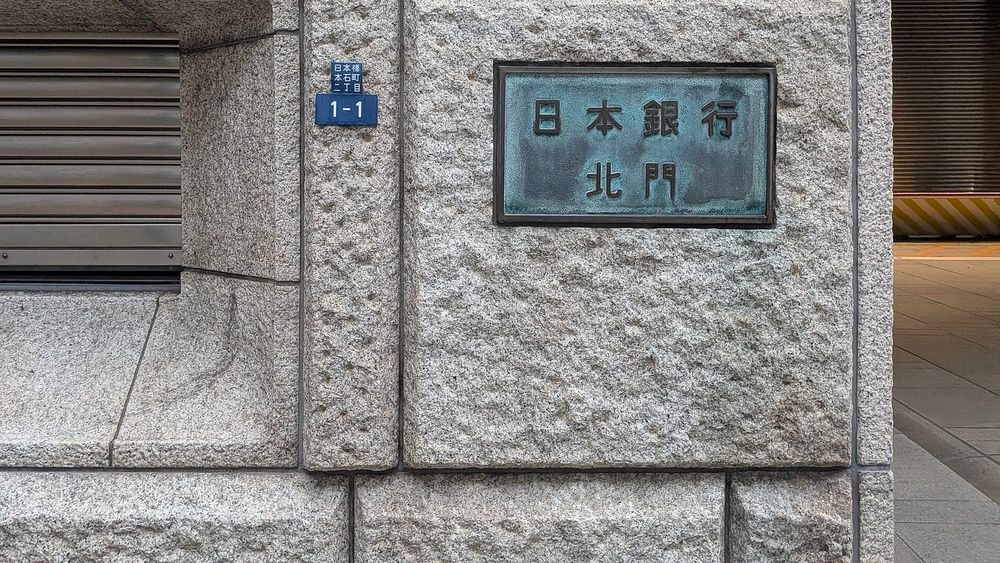
Naoki Tamura, a member of the Bank of Japan's policy board, said on Thursday that the central bank must respond swiftly to signs of an inflation overshoot, including by speeding up interest rate hikes, keeping alive the prospect of a rise as soon as December. He spoke at a meeting with local leaders in Kofu, Yamanashi Prefecture, on 26 November.
"Given that financial conditions remain accommodative, I believe the BOJ needs to bring its policy rate to a level deemed neutral to the economy soon," Tamura said. He added that the policy rate was "still some way" from neutral when judged from still-loose financial conditions.
PRICE PRESSURE BUILDS
Rising raw material costs, including higher crude oil prices due to the Middle East conflict, are already pushing up prices for a wide range of goods, Tamura said. He also pointed to higher import costs from a weak yen, still-robust demand for AI-related goods, labour shortages and the spread of corporate price increases.
Because underlying inflation in Japan is less firmly anchored at the 2% target, he said, the bank must respond swiftly to signs of an upward deviation in prices, including by accelerating the pace of policy rate hikes. Surveys suggest past and potential future increases are unlikely to inflict huge damage on corporate activity, he said.
SHORTER GAPS BETWEEN MOVES
The bank raised its policy rate to 1.25% in September after a hike in June, a shorter interval than the roughly twice-a-year hikes seen in 2024 and 2025. It held rates in October but said underlying inflation had roughly hit its 2% target.
"Within a few months of each rate hike, the BOJ can make a reasonable assessment of financial conditions," Tamura said, signalling scope to follow September's move with another as soon as next month. He did not repeat his past estimate putting Japan's neutral rate around 2%. A former commercial bank executive, he is seen by markets as one of the hawks on the nine-member board.
MEGABANKS AND A LONG REGIONAL TAIL
Japan's banking system combines three global megabank groups with a large, fragmented regional sector, according to TGB's market profile of Japan. Domestically licensed banks held ¥1,506.0tn of assets at end-August 2026, and MUFG, Sumitomo Mitsui Financial Group and Mizuho are all global systemically important banks.
The regional tier comprised 97 banks at end-March 2026, many serving shrinking local economies, with 247 shinkin banks below that.
THE TGB VIEW
In TGB's Top 100 banks in the world 2026, ranked by total assets in US$ billions, Mitsubishi UFJ Financial Group is 10th with US$2,704.6bn, Sumitomo Mitsui Financial Group 17th and Mizuho Financial Group 19th, with returns on equity of 10.9%, 10.0% and 11.0% on March 2026 company reports. Tamura is one voice on a nine-member board, and the test is the two-day meeting ending on 18 December, where 61 of 71 economists in a Reuters poll expect a move to 1.5% from 1.25%.
Related: Bank of Japan's Ueda says rate rises will continue as he plays down a dip in consumer spending
Bank news that matters, every weekday.
Follow The Global Banker on LinkedIn