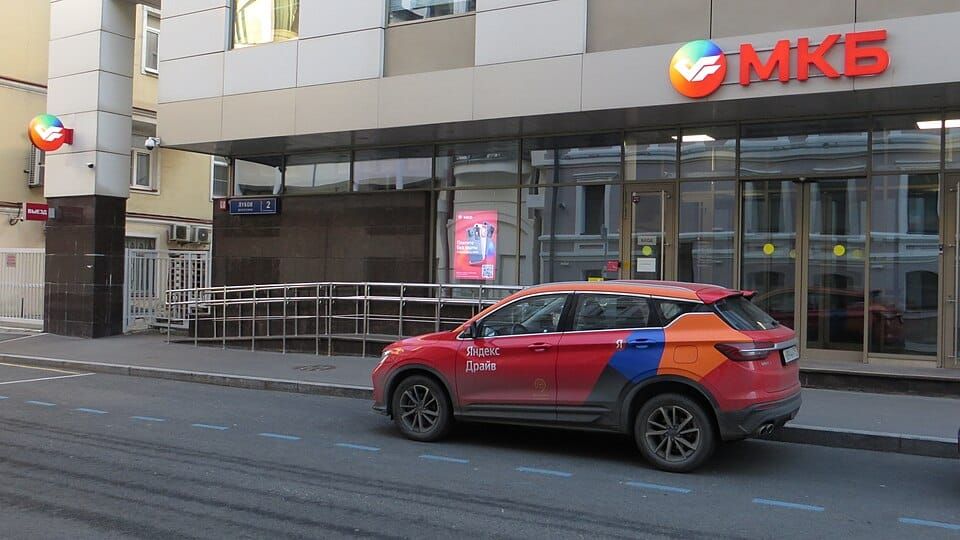
Credit Bank of Moscow PJSC, a lender designated systemically important by the Bank of Russia, has classified 671 billion rubles ($8 billion) of its corporate loan book as problematic as of the end of June, according to the bank's latest financial results reported on Thursday. The figure represents more than 27% of the bank's total corporate loan portfolio, meaning the lender considers those debts unlikely to be repaid in full. The volume of such exposures rose by 28% during the first half of 2026 alone, indicating a marked deterioration in asset quality over a six-month period. The disclosure places roughly one in four rubles of corporate credit at the institution in a category the bank itself flags as impaired.
The deterioration follows a prolonged period of elevated borrowing costs in Russia, which have squeezed capital-intensive corporate borrowers across the economy. The bank's difficulties have been building since at least 2025 against a backdrop of slowing growth, and reflect the compounding effect of aggressive lending expansion in prior years combined with a concentrated borrower base. Credit Bank of Moscow is Russia's third-largest private bank by assets, giving its credit performance significance beyond its own balance sheet.
CONCENTRATION IN CAPITAL-INTENSIVE SECTORS
The bank's exposure is weighted toward borrowers in sectors that have absorbed the heaviest pressure from high interest rates and weakening demand. Coal mining, machine building and retail feature among the industries where the lender's corporate concentration is significant, and each has faced worsening financial conditions as funding costs remained elevated. That concentration has left the institution particularly sensitive to the trajectory of a small number of large industrial borrowers rather than to broad-based consumer credit performance.
Reporting indicates that Rosneft could serve as a potential source of capital for the bank should additional support prove necessary, according to two people familiar with the matter cited by Bloomberg. Separately, the Bank of Russia retains the capacity to provide support given the lender's systemic designation, a status that in the Russian framework subjects institutions to heightened supervisory requirements while also implying a stronger official backstop. Neither channel has been formally activated on the basis of the disclosed figures.
SYSTEM-WIDE ASSET QUALITY PRESSURE
The bank's ratio stands well above the aggregate for the Russian banking system. Bank of Russia data show the share of problem corporate loans across the sector at approximately 12% at the end of June, up from 11.2% a year earlier. The share of high-risk restructurings over the same period increased from 3.5% to 4.9%, a measure supervisors watch as an indicator of stress being deferred rather than resolved. On both metrics the direction of travel is negative, though the system-wide numbers remain far below the concentration reported at Credit Bank of Moscow.
The disclosure will focus attention on how far impairment at individual systemically important institutions diverges from sector averages, and on whether provisioning keeps pace with the recognition of problem exposures. Also relevant is the funding backdrop: 286.4 billion rubles (nearly $3.4 billion) was withdrawn from Russian banks during the first two weeks of August, according to reporting by The Washington Post. Subsequent reporting periods will show whether the 28% first-half increase in problem loans reflects a one-off recognition of legacy exposures or a continuing trend, and whether capital support from either a corporate shareholder or the central bank becomes necessary.