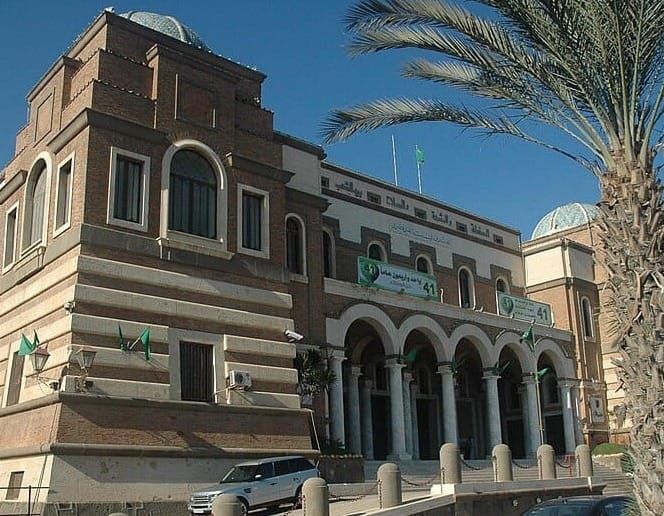
Libya's eastern-based House of Representatives approved in principle the resignation of Central Bank of Libya Governor Naji Issa on 22 October and appointed board member Fowzi Musbah Abukhzam to the position, the parliament's spokesperson said on Thursday. The decision was issued as a provisional measure to oversee the governor's duties following the resignation.
According to the resolution, Issa's resignation will go to the House at its next session for a final decision. It stresses that the bank will keep operating and performing its duties regularly during the transitional period. The spokesperson said via X that parliament will discuss the resignation in the coming session.
INTERIM TERMS OF THE RESOLUTION
The House's Presidency Bureau issued the measure as Resolution No. 5 of 2026. It accepts Issa's resignation in principle and tasks Abukhzam, in his capacity as a member of the bank's board of directors, with carrying out the governor's duties until the House rules at its next session.
The decision remains in effect until a final ruling is issued on the resignation and the legal status of the governor. It also commits to implementing the necessary procedures to ensure a smooth transition.
HIGH COUNCIL OF STATE REJECTS THE MOVE
High Council of State (HCS) first deputy Naji Mukhtar Ali rejected what he called "the unilateral measures taken by the presidency of the House of Representatives". In a letter seen by Reuters and confirmed by a central bank official and an HCS source, Ali told Issa: "You are requested to continue performing your tasks."
Presidential Council Chairman Mohamed Menfi has also rejected the resignation, expressing support for the independence and stability of the Central Bank.
HOW THE RESIGNATION UNFOLDED SINCE AUGUST
Issa submitted his resignation to the country's rival legislative chambers on 10 August. According to two documents seen by Reuters at the time, he said he could not continue in his post but did not explain why. Both chambers then said he should stay in position until the issue was discussed.
A senior central bank source said Issa had set three main conditions for withdrawing the resignation, as the country faced mounting economic pressures, most notably the depreciation of the Libyan dinar and cash shortages. Issa took up the post in 2024, when the two chambers agreed his appointment to end a standoff over control of the bank that led to the ousting of former governor Sadiq al-Kabir.
RIVAL AUTHORITIES AND THE BANK'S STANDING
Libya has been divided since 2014 into rival authorities in the west and east, which emerged from the turmoil after the fall of Muammar Gaddafi in a NATO-backed uprising in 2011. The two legislative chambers are the eastern-based House of Representatives, elected in 2014, and the HCS in the west, whose members were drawn from a parliament elected in 2012.
On 13 October, Issa and his delegation met a US Federal Reserve delegation on the sidelines of meetings in Bangkok, according to the central bank. The Federal Reserve delegation commended the bank's efforts and praised its success in resuming foreign currency supply operations to Libya after years of suspension.
Related: Central Bank of Libya opens subscription for 34th Mudaraba certificate issue