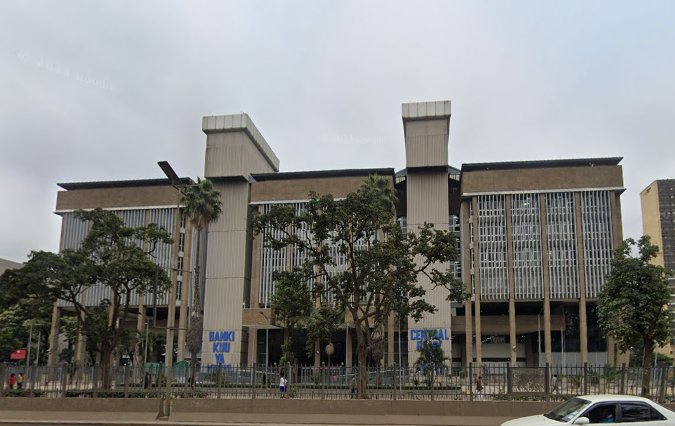
Kenya's largest commercial banks have asked the Central Bank of Kenya (CBK) for a one-year postponement of its prudential guidelines for Domestic Systemically Important Banks (D-SIBs), which are slated to start on 1 January 2027, according to local news reports. The request was made by the chief executives of the country's biggest commercial banks at a meeting organised by the Kenya Bankers Association (KBA) last week, according to one report.
KBA chief executive Raimond Molenje said the timing could jeopardise the recovery in private-sector credit, especially financing for micro, small and medium enterprises and agriculture, as the country heads into the 2027 general election. Molenje urged the CBK to pause the reforms, saying: "2027 must be different! We must reverse the previous cycles of economic slowdown during general elections and sustain credit flows to the private sector." He added that a suspension would allow deeper engagement on how the rules affect lending, dividends and capital raising.
WHAT THE RULES WOULD REQUIRE
The proposed framework would classify lenders by systemic importance and assign extra Common Equity Tier 1 (CET1) buffers of 0.5 per cent, 1.5 per cent or 2.5 per cent of risk-weighted assets, depending on the category. It would also link dividend payouts to CET1 ratios: banks below 8.625 per cent would retain all earnings, while banks above 10.5 per cent would face no additional retention requirement. The rules would also restrict share buybacks and discretionary bonuses.
HOW THE CBK WOULD CHOOSE THE BANKS
Under the draft framework, banks would be assessed on five indicators: size, interconnectedness, substitutability, complexity and importance to the domestic economy. Size carries the highest weighting at 40 per cent, followed by interconnectedness at 30 per cent.
Newly designated banks, and those moved into a higher bucket, would have up to 12 months from notification to meet the extra capital requirement. An analysis of the draft said the framework was likely to be most relevant to Kenya's largest and most interconnected lenders, such as Equity Group, KCB Group and Co-operative Bank, and noted that the CBK had not yet published a final list of designated D-SIBs.
CREDIT RECOVERY AND THE CORE CAPITAL DEBATE
Private-sector credit grew by 10.6 per cent in September 2026 after a 2.9 per cent contraction in January 2026, according to CBK data. Average commercial-bank lending rates fell to 14.4 per cent in September 2026 from a peak of 17.2 per cent in November 2025, which the CBK said helped to lift loan demand across trade, construction, agriculture finance, insurance and consumer durables.
The capital-buffer proposal coincides with talks over a separate increase in the minimum core capital for all commercial banks to KSh10 billion. The CBK's transition schedule calls for KSh5 billion by December 2026, KSh7 billion by December 2027, KSh8 billion by December 2028 and KSh10 billion by December 2029, while the National Treasury, through Cabinet Secretary John Mbadi, prefers a single deadline of December 2032.
Fourteen banks were reported to be below the KSh5 billion core-capital threshold as of June 2026, and seven of those were also under the previous KSh3 billion requirement. Mbadi said the Treasury is in talks with Governor Kamau Thugge and will reach an agreement that serves the economy.
THE TGB VIEW
KCB Group and Equity Group, two of the lenders the rules are likely to reach, rank 13th and 15th among the largest banks in Sub-Saharan Africa in the TGB Bank Rankings, with returns on equity of 20.2 per cent and 23.3 per cent. Kenya had 38 commercial banks at end-2025, and eight large banks accounted for 69.7 per cent of the market on the CBK's composite index, led by KCB Bank Kenya, which held 17.9 per cent of sector net assets. The date to watch is 1 January 2027, when the guidelines are slated to start unless the CBK grants the delay.
Bank news that matters, every weekday.
Follow The Global Banker on LinkedIn