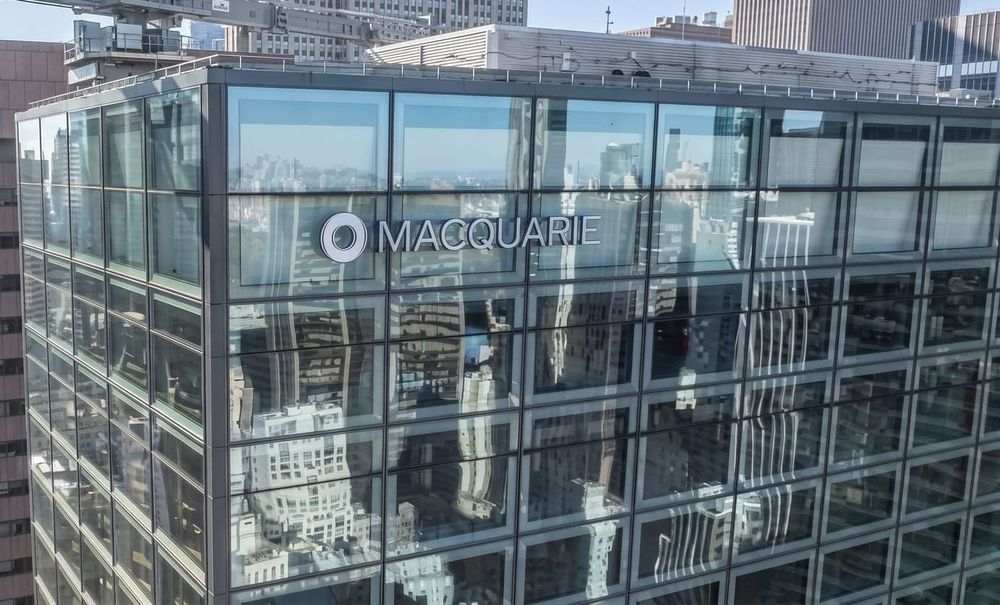
Macquarie Group made a net profit of A$2.48bn in the six months to 30 September, 50% more than a year earlier but 22% less than the A$3.18bn of the previous half, the group said. Net operating income rose 10% to A$9.57bn, while operating expenses were A$6.32bn, up one per cent.
The result was the last delivered by Shemara Wikramanayake, who retires as managing director and chief executive today. “It has been a privilege to work with so many talented Macquarie teams over the last 39 years, including for the last eight years as CEO,” she said, adding that she had every confidence in the momentum continuing under Greg Ward’s leadership.
TRADING CARRIES THE HALF
Commodities and Global Markets lifted its net profit contribution by 83%, driven by higher net interest and trading income across all major business lines as client activity increased. Macquarie Asset Management contributed A$1.51bn, up 28% from A$1.18bn, mainly because of the gain on the sale of Macquarie AirFinance, partly offset by lower performance fees.
Macquarie Capital went the other way: its contribution fell 61% on lower investment-related income and lower mergers and acquisitions fees, partly offset by higher brokerage income.
Banking and Financial Services lifted its contribution 6% to A$841m from A$793m on growth in loans and deposits. Margins were lower, the group said, reflecting portfolio mix and competition for loans and deposits, and credit provisions and expenses were higher.
A PLANNED HANDOVER
Ward, who heads Banking and Financial Services, was named as Wikramanayake’s successor by chair Glenn Stevens, subject to approvals. Wikramanayake steps down from the boards of Macquarie Group and Macquarie Bank effective 6 November, and Ward joins both boards effective 7 November. Over her eight years as chief executive, Stevens said, she steered Macquarie through expansion into new markets and the dislocation of the COVID pandemic.
Macquarie competes outside the four majors: of 89 licensed banks at June 2026, Commonwealth Bank, Westpac, National Australia Bank and ANZ held A$5.13tn of assets, about 73% of the total, and the 30 other domestic banks are led by Macquarie and regional lenders.
CAPITAL AND PAYOUT
The Bank Group’s common equity tier 1 ratio was 12.9% at 30 September, up from 12.8% at the end of March, and total deposits rose 10% in six months. The annualised return on equity was 13.8%, against 14.0% for the 2026 financial year.
The board declared an interim dividend of A$3.25 a share, a payout ratio of 50%, above the interim dividend a year earlier and below the final dividend for the previous half. Ward, as chief executive designate, gave the outlook; the group said it continues to maintain a cautious stance, with a conservative approach to capital, funding and liquidity.
THE TGB VIEW
Macquarie ranks 43rd in Asia-Pacific and 98th worldwide in the TGB Bank Rankings, with US$369.7bn of assets and a 13.4% return on equity on March 2026 figures. On its own measure the group’s annualised return slipped to 13.8% this half from 14.0% for the 2026 financial year, despite a 61% fall in Macquarie Capital’s contribution, so trading did the heavy lifting. The division Ward ran is the one to watch: it grew loans and deposits while lending and deposit competition narrowed its margins. Shareholders on the register on 12 November receive the interim dividend on 17 December.
Bank news that matters, every weekday.
Follow The Global Banker on LinkedIn