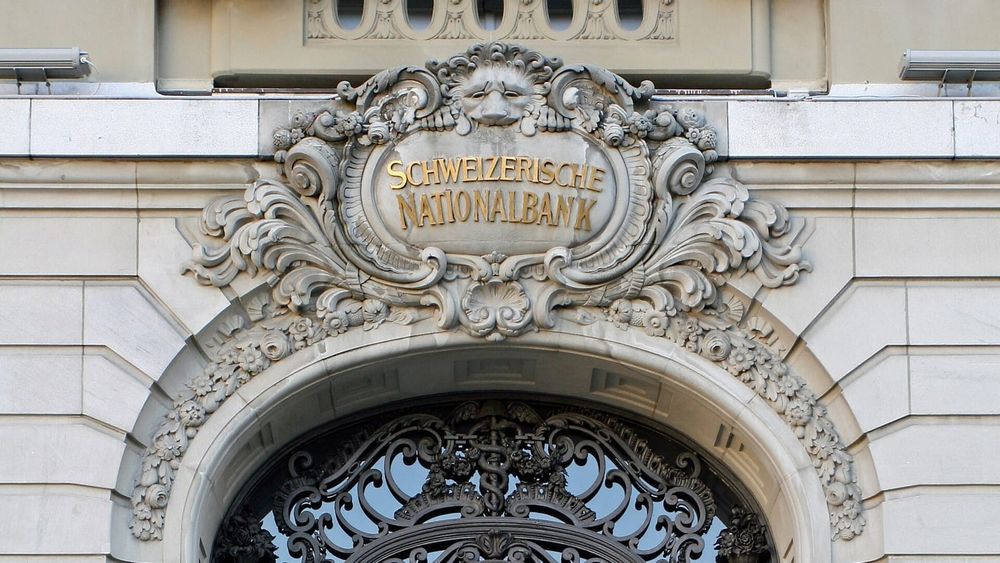
At the time of its most recent interest rate decision, the Governing Board of the Swiss National Bank (SNB) saw no need to increase its readiness to intervene in the foreign exchange market. This is evident from the summary of the monetary policy discussion, published on Thursday. The summary covers the decision of 24 September, when the SNB left its policy rate unchanged at 0%.
The SNB attributes its position to only a slight increase in medium-term inflationary pressures and to barely discernible second-round effects of higher energy prices. Swiss inflation rose slightly, from 0.6% in May to 0.8% in August.
INTERVENTION SIGNAL WITHDRAWN AFTER JUNE
In June, the SNB had signalled an increased willingness to intervene in the foreign exchange market. In September, it dropped that wording.
According to the minutes, the SNB no longer considered such increased willingness necessary in the current environment. Between June and September, the franc depreciated by approximately 3% in trade-weighted terms, reflecting the growing appeal of borrowing in the low-yielding currency.
The Swiss Franc was pegged to the Euro between 2011 and 2015.
ENERGY PRICES AND SECOND-ROUND RISKS
So far, there have been few signs that higher prices have spilled over to other goods and services or to wages. The SNB cautions, however, that the longer oil prices remain at high levels, the greater the risk of such second-round effects becomes.
On growth, the SNB currently expects the Swiss economy to expand by between 1.5% and 2% for 2026 as a whole.
ARTIFICIAL INTELLIGENCE AND THE LABOUR MARKET
The SNB also examined the potential impact of artificial intelligence on the labour market. Increased use of AI could raise structural unemployment and dampen consumption, although the SNB noted that it is still too early to make a definitive assessment.
The SNB stressed that it is still too early to make a definitive assessment of the impact of AI.
Related: Swiss National Bank holds policy rate at zero as inflation rises