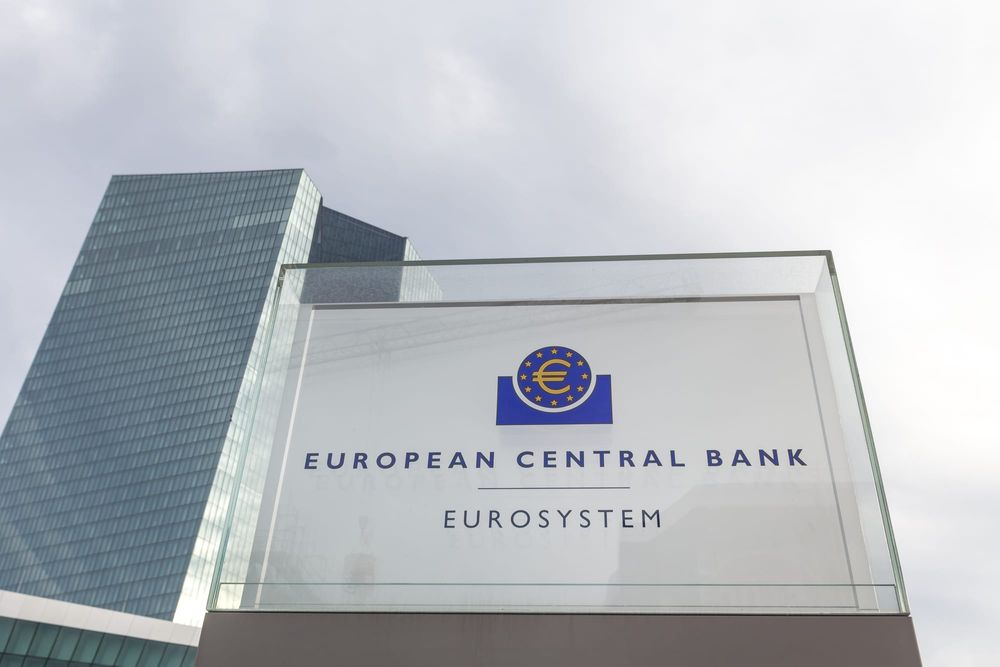
The European Central Bank should resist market pressure to rapidly raise interest rates in response to the Middle East conflict and its inflationary spillovers, according to executive board member Isabel Schnabel, who argued that policymakers have sufficient time to carefully analyze incoming economic data before making policy adjustments.
Speaking at an event, Schnabel—typically considered a hawkish voice on the ECB's Governing Council—emphasized that while vigilance is warranted, there is "no need to rush into action." Financial markets are currently pricing in rate increases from the ECB this year. Schnabel's intervention suggests the central bank may move more cautiously than investors anticipate.
"We have to carefully weigh our decisions," Schnabel said. "We have the time to look at the data and analyze what is actually happening, whether there is evidence of second-round effects and how likely it is that this inflation shock is becoming entrenched in inflation expectations and also in wage growth."
DISTINGUISHING CURRENT SHOCK
Schnabel's case for restraint rests on a fundamental distinction between today's economic environment and the inflationary crisis of 2022. She highlighted that interest rates are already elevated, fiscal policy support has been withdrawn, there is no pent-up consumer demand, and supply-demand imbalances have shifted compared to the post-pandemic period. These structural differences, she argued, give the ECB room to conduct a thorough assessment rather than react reflexively to energy price spikes.
The ECB's Governing Council has acknowledged that rising energy prices stemming from geopolitical tensions will likely drive near-term inflation higher while simultaneously dampening economic growth. This stagflationary dynamic has complicated the central bank's calculus, as traditional rate increases risk exacerbating growth concerns even as inflation pressures mount.
WATCHING FOR PERSISTENCE
The critical question policymakers must answer, according to Schnabel, is whether the energy shock proves temporary or becomes embedded in broader price-setting behavior. Second-round effects—where rising energy costs feed into wage demands and pricing power across the economy—represent the true inflation threat. Without evidence of such persistence, the ECB can afford to wait.
Schnabel noted that the 2022 inflation experience has equipped policymakers with crucial warning signs to monitor. "We also shouldn't overreact," she cautioned, signaling concern that premature tightening could unnecessarily weaken the eurozone economy if the energy shock ultimately proves transitory.
Yet Schnabel was equally clear that the ECB will not hesitate to act decisively if conditions warrant. "Monetary policy would need to act if there is a more persistent impact on inflation, and it will act, and it will act decisively," she stated, reaffirming the central bank's commitment to its 2 percent inflation target. This formulation—balancing patience with resolve—appears designed to reassure markets that the ECB remains committed to price stability while tempering expectations for an imminent rate-hiking cycle.
MARKET EXPECTATIONS DIVERGE
The gap between Schnabel's cautious rhetoric and market pricing reflects broader uncertainty about the ECB's policy trajectory. Investors have grown accustomed to central banks responding swiftly to inflation surprises, but Schnabel's emphasis on data dependency and structural differences suggests the ECB may chart a more measured course than recent precedent would suggest. The coming weeks will prove crucial as the central bank receives fresh inflation and wage data that could either validate Schnabel's patience or force a policy recalibration.