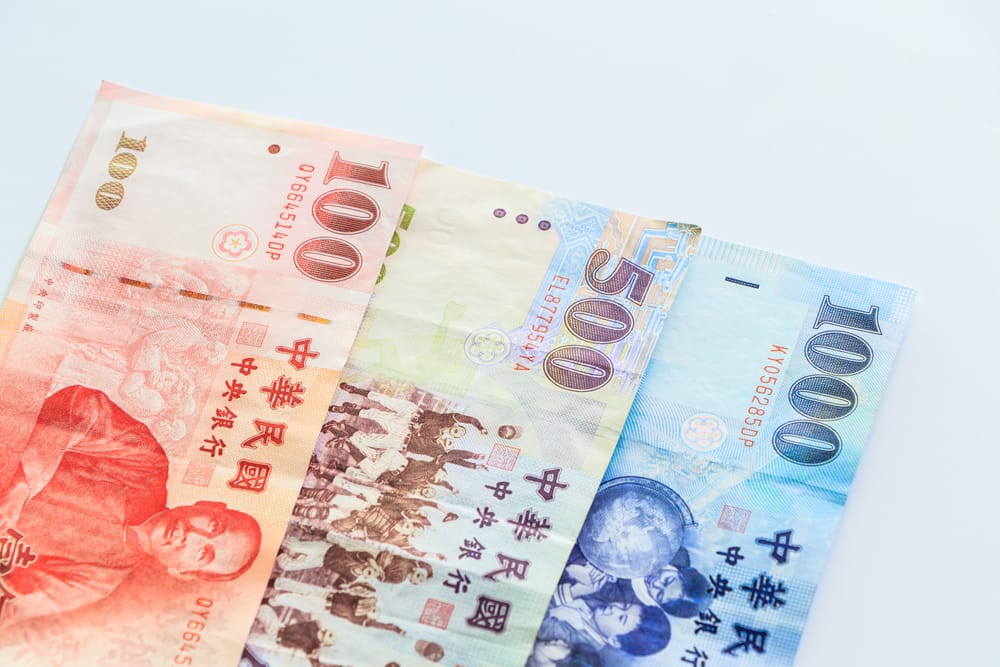
Taiwan's central bank kept interest rates unchanged Thursday, maintaining its restrictive monetary policy stance even as geopolitical tensions and energy price shocks complicate the economic outlook. The decision to hold the benchmark discount rate at 2% marks the eighth straight meeting without policy adjustment.
The Central Bank of the Republic of China left its discount rate at 2.000%, with secured lending rates at 2.375% and unsecured lending rates at 4.250%. The decision proved unanimous and aligned with expectations from all 29 economists surveyed by Reuters ahead of the announcement. Taiwan maintains some of Asia's tightest monetary policy settings, a position it has held firm on even as regional peers embarked on rate-cutting cycles last year.
GROWTH SURGE OFFSETS INFLATION RISKS
The central bank's confidence in holding rates stems largely from Taiwan's robust economic performance. Policymakers raised their 2026 growth forecast to 7.28% from 3.67% projected in December, reflecting the island's dominant position in artificial intelligence chip manufacturing. Taiwan's economy expanded 8.68% in 2025, its fastest pace in 15 years, driven by surging global demand for semiconductors used in AI applications from companies including Nvidia.
This economic momentum provides policymakers crucial breathing room to resist rate cuts despite headwinds facing other central banks worldwide. The central bank noted that "continued expansion in business opportunities related to emerging technology applications is expected to further support steady growth in Taiwan's exports," signaling confidence that the AI boom will sustain growth momentum.
Yet the central bank acknowledged mounting inflation pressures, raising its consumer price index forecast for 2026 to 1.80% from 1.63% previously. The upward revision reflects escalating energy costs stemming from Middle East conflict, which has sent crude oil prices above $100 per barrel. This inflation dynamic creates the classic policy dilemma: growth remains strong, but price pressures are rising, leaving little room for rate cuts without risking further inflation acceleration.
GEOPOLITICAL UNCERTAINTY CLOUDS OUTLOOK
The Middle East conflict has emerged as a critical variable in Taiwan's policy calculus. Federal Reserve Chair Jerome Powell acknowledged Wednesday that tensions between the U.S., Israel, and Iran have created economic uncertainties, a concern that resonates equally in Taipei. Cathay United Bank chief economist Lin Chi-chao noted that the central bank "needs more time to observe the situation" given the volatile energy environment.
Taiwan's decision came one day after the Federal Reserve held rates steady and signaled expectations for only a single rate reduction this year, projecting higher inflation and steady unemployment. The Fed's hawkish posture reinforces the case for Taiwan's central bank to remain on hold, as maintaining relatively higher rates helps support the Taiwan dollar against regional currencies and prevents capital flight.
RATES AT 15-YEAR HIGHS
Taiwan's 2% discount rate represents the highest level in 15 years, reflecting the central bank's determination to keep monetary conditions restrictive despite global rate-cutting trends. The last time the central bank eased policy was in 2020, during the pandemic emergency. This extended hold demonstrates confidence that strong growth and steady inflation provide sufficient room to maintain restrictive settings without threatening economic activity.
Economists expect this cautious stance to persist. The combination of robust AI-driven growth, elevated energy costs, geopolitical uncertainty, and the Fed's hawkish outlook creates little incentive for the central bank to pivot toward easing. Unless growth deteriorates sharply or oil prices collapse, Taiwan's benchmark rate appears likely to remain anchored at 2% for the foreseeable future, keeping the island's monetary policy among Asia's most restrictive.